

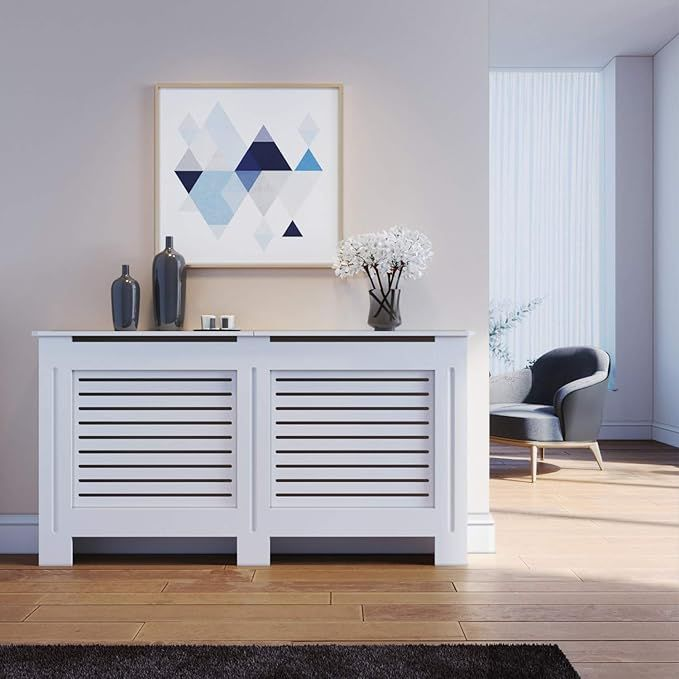
Radiator covers have become a popular household feature in homes across the UK. They serve a dual role: improving the look of your home while offering practical safety benefits. Parents often choose them to protect children from hot surfaces, while homeowners use them to add a decorative touch or extra shelf space.
But in 2026, radiator cover prices vary widely. This leaves many wondering how much they should expect to spend. This guide provides a detailed UK price breakdown based on 2026 market trends for DIY, off-the-shelf, and bespoke options.
What is a Radiator Cover and Why Invest in One?
A radiator cover is a casing that sits over a standard wall radiator. It allows heat to pass through via a grille or vented face, while turning the radiator into a tidy piece of furniture. Most covers are made from MDF or wood, though metal designs exist for industrial or modern schemes.
The benefits are simple and practical. First, it improves room aesthetics. A boxy radiator can look out of place, but a cover turns it into a neat feature or console. Second, it adds child and pet safety. A cover reduces the risk of direct contact with a hot panel. Third, it provides useful shelf space. The top surface becomes a spot for frames, plants, or a lamp. Fourth, it can shape heat flow. A top shelf can help deflect warm air into the room, though heavy or poorly vented designs can reduce efficiency. Balanced ventilation is the key.
Key Factors Influencing Radiator Cover Prices
Understanding the variables that determine the final price tag is crucial for setting a realistic budget. A radiator cover's cost is not a single number but the sum of several interconnected decisions. By breaking down these elements, you can make informed choices that align with your finances and your vision for your home.
· Material
MDF is the most common choice because it is smooth, easy to paint, and affordable. Plywood offers added strength and moisture resistance. Solid wood—like oak or walnut—adds weight, durability, and a premium look. Metal is less common in living spaces but works in modern schemes and tough-use areas.
· Size and dimensions
Standard sizes are cheaper. Custom sizes cost more because they require specific cutting and finishing. Long or extra-high units need more sheet material and stronger framing.
· Design complexity
Simple louvred or slatted fronts are affordable. Intricate fretwork, curved corners, deep skirting cutouts, and matching end panels raise the price. The more detailed the grille, the higher the cost and lead time.
· Finish
Primed-only units cost less up front but require paint and time. Pre-painted models cost more, but they save effort and deliver a consistent factory finish. Custom colours raise the price further. Spray finishes offer smoother results than brush paint.
· Labour
DIY assembly is the cheapest path, but it requires tools, time, and a steady hand. Professional installation adds cost but ensures a secure fit, clean cuts, and tidy wall fixings. Complex rooms and uneven walls add time.
Radiator Cover Price Breakdown by Project Type
Here is the detailed 2026 price breakdown across the four main purchase pathways.
The Budget Option: DIY Radiator Cover Costs
DIY is the budget-smart route with the most flexibility. It suits anyone comfortable with basic carpentry, sanding, and painting. The savings are real, and the results can be excellent. Still, it takes time to measure, cut, assemble, and paint. Anyone new to woodworking should set realistic expectations.
Pros are clear. The cost is lowest, and the design can match an exact radiator width and valve clearance. Custom grille patterns are possible with off-the-shelf panels or laser-cut inserts. The finish can match trim paint, doors, or kitchen cabinets. Repairs and touch-ups are easy because the paint is already on hand.
Cons include the time commitment, the need for a clean workspace, and basic tools. Sharp cuts and square joints matter for a neat face and flush top. Without proper ventilation, a cover can trap heat, so the design must include a top gap and an open or vented front.
Detailed Material Cost Breakdown (2026 typical ranges)
· MDF sheets (18mm): £25–£35 per standard sheet
· Plywood sheets (optional upgrade): £30–£45 per sheet
· Timber for frame and braces: £15–£25
· Decorative moulding or grille panel: £15–£30
· Screws, wood glue, filler: £5–£10
· Primer and paint (satin or eggshell): £20–£40
A single standard cover can often be built from one sheet of MDF plus a grille and trim. Larger radiators, extra height, or a deep top shelf can push the material count to two sheets. If a plywood top is preferred for durability, add the cost of one extra panel.
Total Average DIY Radiator Cover Cost: £60–£150
This range covers most single-radiator projects in living rooms, bedrooms, and hallways. Smaller radiators and simple fronts can land at the low end. Large spans, thick tops, and premium grille panels push to the high end.
Essential Tools Required
· Circular saw or track saw for straight cuts (or a hand saw with a guide)
· Jigsaw for cutouts and valve access
· Drill/driver and countersink bit
· Sander and sanding blocks
· Clamps, square, and measuring tape
· Paintbrushes, foam rollers, and dust sheets
If tools are not already owned, budget £40–£100 for basic DIY-grade items. Hiring a track saw from a local tool shop for a day can be cost-effective and safer for long straight cuts.
Time Investment
Expect 4–8 hours split across two days. Day one for cutting, dry fit, and assembly. Day two for sanding, priming, and two coats of paint. Drying times vary by paint type and humidity. A smooth finish comes from patient sanding between coats and gentle dust control.
Design Tips for Better Heat Flow
· Keep the top open at the back to create a warm air path
· Use a ventilated front with slats or a grille
· Avoid thick insulation that traps heat
· Leave clearance around valves for access and airflow
The Convenience Option: Basic Off-the-Shelf Radiator Cover Costs
Off-the-shelf covers suit standard radiators and tight timelines. They arrive flat-packed, include all fixings, and assemble in under an hour. Most are made from primed MDF and ship in standard widths with adjustable feet or minor trim adjustments.
Typical Materials
· Primed MDF with louvred or slatted front
· Occasional veneer tops or thin solid wood caps
· Pre-cut valve notches or easy trim guides
Price Range by Size
· Small (up to 600mm wide): £50–£120
· Medium (600mm–1000mm wide): £90–£180
· Large (1000mm–1500mm wide): £140–£250
Where to Buy
Look to major UK retailers: B&Q, Wickes, and Homebase. Online options are widely available via Amazon and eBay. These channels make comparison easy and allow fast delivery. Many products arrive primed only, so factor paint if a colour match is required.
Pros and Cons
· Pros: Quick, affordable, and easy to assemble. Good for renters. Reversible for repainting later.
· Cons: Limited to standard sizes. May require trimming for a neat fit. Paint finish varies by brand. Some units feel lightweight.
Fit and Finish Tips
· Measure the full width including valves, not just the radiator body
· Check height to clear skirting boards and window sills
· If cutting to fit, prime exposed edges to prevent swelling
· Fix to the wall with hidden brackets for safety and stability
The Balanced Choice: Mid-Range Radiator Cover Prices
Mid-range covers are a strong step up in materials, durability, and finish. They suit family homes and buyers who want a longer-term solution without the full cost of bespoke joinery. Many units arrive pre-painted with a smooth satin sheen. Others offer semi-custom sizing to close the gap between standard and fully bespoke. If you are looking for such a radiator cover, you can go ahead with the reputed UK retailers including the Radiator Cover Company and Designer Radiator Covers.
Typical Materials and Features
· Superior MDF grades for smoother edges
· Solid wood tops or hardwood veneers for durability
· Factory pre-painted finishes in white, grey, or popular neutrals
· Optional colour matching or a curated palette
· Cleaner grille designs with crisp fretwork or metal inserts
Price Range by Features
· Standard size, pre-painted: £150–£350
· Made-to-measure (basic): £250–£500
· Upgrades (solid wood top, custom colour): +£50–£150
Retailers and Specialists
Look for specialist online retailers and independent makers that focus on radiator covers and hallway furniture. Brands in this space often offer small tweaks to depth and height, better grille patterns, and improved assembly hardware. Expect clearer fitting instructions and sturdy wall fixings.
Who This Suits
· Homeowners who want a neat finish without the hassle of DIY painting
· Families who need a tougher top surface for daily use
· Renovators seeking a cohesive look across several rooms
What to Watch
· Lead times for custom colours can add one to three weeks
· Colour swatches seen on screens can vary, so request samples
· Confirm the return policy for made-to-measure orders
The Premium Solution: High-End Made-to-Measure Radiator Cover Costs
At the premium end, made-to-measure covers deliver exact dimensions, high-grade materials, and flawless finishes. These are statement pieces that blend into skirting lines, echo cornices, and match cabinetry. Craftsmanship is the focus, and the result looks like built-in furniture.
Typical Materials and Techniques
· Solid oak, walnut, or maple for the top and framework
· Moisture-resistant MDF cores for paint-grade panels
· Professional spray finishes for a glass-smooth surface
· Hand-cut or laser-cut fretwork with refined profiles
· Mitred corners, soft-close panels, and hidden brackets
Price Breakdown
· Standard design, made-to-measure: £400–£700
· Complex or bespoke design: £700–£1,200+
· High-end solid wood builds: £900–£2,000+
The Process
Premium projects often begin with a site survey. A designer confirms clearances, valve positions, and wall irregularities. A design consultation follows to choose grille patterns, edge profiles, and finishes. Installation is usually available and recommended for weight and safety.
Who This Suits
· Period homes that demand precise profiles and symmetry
· High-traffic rooms where durability and finish are critical
· Clients who want to match doors, trims, and built-ins
· Anyone planning to keep the cover as part of a long-term scheme
What Adds Cost
· Complex fretwork and curved corners
· Solid wood construction rather than veneer
· Colour matching to specific paint brands
· Extra-long spans and deep tops for styling
Radiator Cover Installation Costs
Hiring a handyman keeps things simple. The average UK rate for this sort of job is £20–£40 per hour. Most covers take 1–2 hours to assemble and fix to the wall, assuming a clear space and standard plaster. The total lands around £30–£80 for a typical install. Add time if the wall is uneven, if cutting is required, or if multiple units are being fitted in one visit.
Setting Your Radiator Cover Budget for 2026
Budgeting is easier when the market is split into four paths. Here is a quick reference to anchor expectations and avoid hidden extras.
· DIY: £60–£150
This is the lowest-cost route with the highest flexibility. Allow for paint, a grille, and possibly tool purchases. Set aside time for sanding and second coats. Save offcuts for future repairs or touch-ups.
· Off-the-Shelf: £50–£250
Great for standard radiators and quick upgrades. If the unit is primed only, budget paint and brushes. For a rented flat, choose a unit with non-invasive wall fixings and easy removal.
· Mid-Range: £150–£500
Expect better finishes, sturdier tops, and semi-custom sizing. This balance suits family homes and anyone planning to keep the cover for several years. Measure carefully to avoid returns on made-to-measure items.
· High-End: £400–£2,000+
This is a furniture-grade investment with exact sizing and superior materials. Lead times apply, and installation is often a wise add-on. If kitchens and living areas are being renovated, align profiles and colours across spaces for a cohesive look.
Conclusion: Finding the Perfect Radiator Cover for Your Budget and Home
Radiator covers in 2026 span a wide price range. A simple DIY build can cost as little as £60. A refined off-the-shelf unit provides a fast, tidy upgrade from £50 to £250. The mid-range brings better materials and finishes from £150 to £500. Bespoke, made-to-measure designs become furniture-grade pieces from £400 to £2,000 and beyond.
The best choice is personal. It depends on budget, design goals, and practical skill. DIY suits hands-on homeowners who value savings and full control over colour and grille style. Off-the-shelf is ideal for quick wins on standard sizes. Mid-range strikes a durable balance with stronger tops and factory finishes. Premium bespoke is the right call when fit and finish must be exact and long-lasting.
A well-designed cover does several jobs at once. It softens a room, shields against heat, adds a useful shelf, and blends hardware into the background. With a clear view of 2026 prices, it becomes easy to set a budget, choose a path, and plan the next steps with confidence.
Ready to explore specific models and finishes? Visit Elegant Showers UK to browse styles across all budgets and speak with a consultant about sizing, colour options, and made-to-measure solutions.



Validate your login