

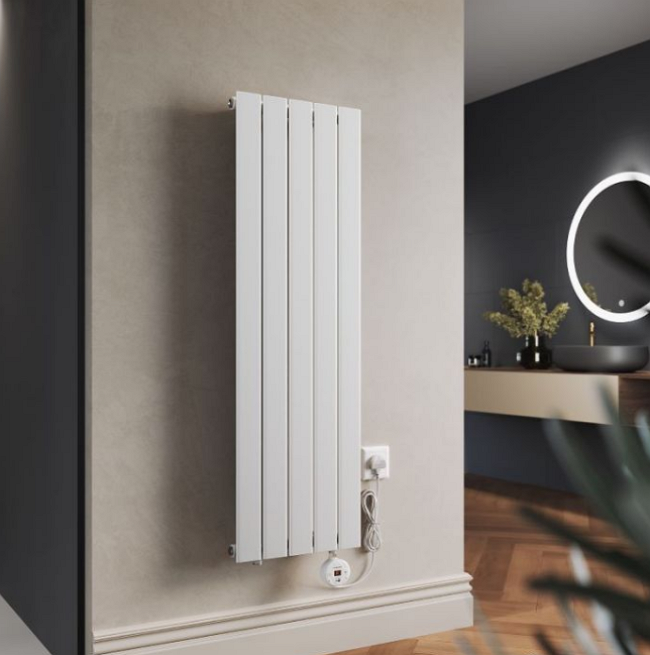
Choosing between vertical and horizontal radiators is no longer just a matter of taste—it's a balance of functionality, efficiency, and design integration. Whether you're upgrading your heating system or redesigning a room, one of the first aesthetic and functional decisions you'll face is radiator orientation. This room-by-room guide helps UK homeowners visualise the best choice for their specific space, considering heat distribution, wall space, furniture placement, and interior style.
What Are Horizontal Radiators?
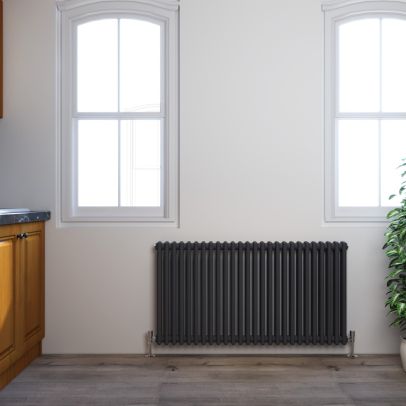
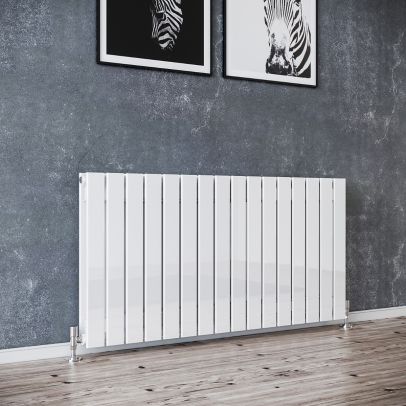
Horizontal radiators are the most commonly found radiator type in UK homes. Typically installed low to the ground and wide across the wall, they are especially popular in older properties and are often placed beneath windows to counteract draughts. Their typical dimensions are approximately 1200mm wide x 600mm high, with low-profile units designed to run along skirting areas or below sills. They offer strong horizontal heat flow, ideal for broad coverage in larger spaces, and naturally warm the coldest part of a room near windows or exterior walls.
What Are Vertical Radiators?
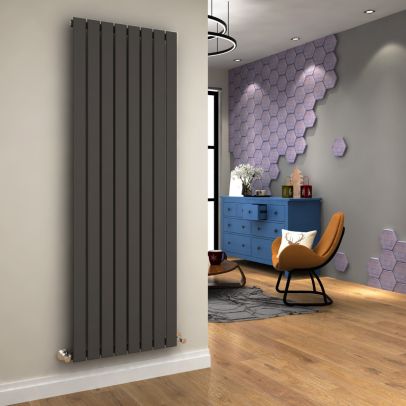
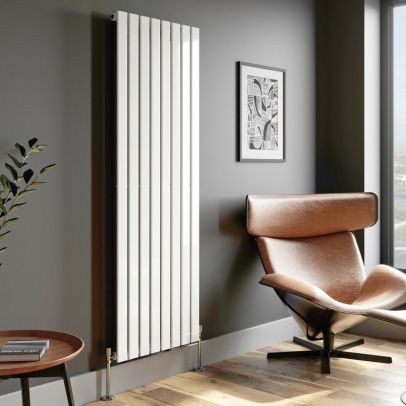
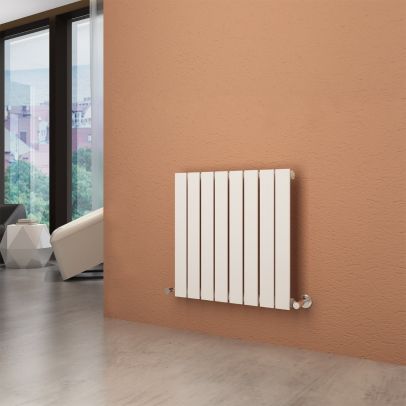
Vertical radiators are a modern take on heating design, offering both aesthetic value and practical benefits in rooms where horizontal space is at a premium. These tall, narrow units stretch upward rather than outward, with typical dimensions of 1800mm high x 400mm wide. They feature slimline profiles suited for tight wall spaces and are available in flat panel, column, mirrored, and sculptural designer formats. Vertical radiators provide vertical convection heat and are highly efficient in rooms with limited wall length but adequate ceiling height.
Core Differences at a Glance
| Feature | Horizontal Radiators | Vertical Radiators |
|---|---|---|
| Shape | Wide and short | Tall and narrow |
| Heat Distribution | Broad, even across room | Focused upward with vertical airflow |
| Space Efficiency | Consumes more wall width | Saves horizontal space, fits tight vertical spots |
| Design Impact | Blends with traditional interiors | Modern, bold visual presence |
| Install Flexibility | Best for under-window mounting | Great when wall space is tight or non-standard |
The BTU Myth: Does Orientation Affect Heat Output?
Many people assume vertical radiators are less effective, but that's outdated thinking. Orientation alone doesn't change the power—a radiator rated at 3000 BTUs will deliver 3000 BTUs whether it's tall and slim or low and wide. What really matters is surface area, material, and correct sizing for your room. Today's vertical radiators are engineered to deliver comparable BTU outputs to their horizontal counterparts—if properly sized.
Room-by-Room Quick Reference Table
While every home is unique, the table below distills thousands of UK heating installations into a clear, actionable decision matrix. However, a quick glance at a grid only tells half the story—the real value lies in understanding why each room leans toward a particular orientation. Below the table, we break down the reasoning, caveats, and edge cases for every space in your home.
| Room Type | Best Orientation | Key Reason |
|---|---|---|
| Living Room | Either | Horizontal under windows; vertical for space-saving |
| Bedroom | Either | Compact panels; vertical for tight spaces |
| Kitchen | Vertical | Saves cabinet space, utilises height |
| Bathroom | Vertical | Heated towel rails, space efficiency |
| Hallway | Vertical | Narrow spaces, height utilisation |
| Home Office | Either | Vertical saves desk space |
| Dining Room | Either | Horizontal under windows; vertical as feature |
| Open-Plan | Either | Vertical for zoning; horizontal for coverage |
Bathroom Radiators: Vertical Heated Towel Rails vs Horizontal Radiators
The bathroom is the one room in the house where the vertical versus horizontal debate tilts most decisively in one direction. A bathroom radiator does two jobs at once: it heats the room and it warms your towels so you're not grabbing a cold one at 7am. This dual purpose—space heating and towel drying—fundamentally changes the decision-making process.
Most people pick on looks alone, end up with something too small to heat the room, then wonder why the bathroom never feels warm. Getting the output roughly right first, matching the finish to your taps, and picking valves that suit how your pipes come in will save you from that fate. Here's everything you need to know to make the right choice.
Vertical Heated Towel Rails: The Bathroom Champion
Why Vertical Dominates
Vertical heated towel rails—often referred to as 'ladder' rails—have become the most popular choice for modern UK bathrooms, and for good reason. Nearly every bathroom radiator falls into one of three shapes: a ladder towel rail, a straight vertical rail, or a column/designer radiator. Among these, the ladder design is the default, and rightly so.
The Pros of Vertical Towel Rails
-
Exceptional Space Savers: Vertical rails make brilliant use of narrow, unused sections of wall that couldn't accommodate a traditional horizontal radiator. This is perfect for smaller bathrooms, en-suites, and cloakrooms where floor and wall space is at a premium. Widths as narrow as 250mm—such as the increasingly popular 250mm wide black towel radiators—fit into gaps that would otherwise be dead space.
-
Creates an Illusion of Height: The strong vertical lines draw the eye upwards, which can make a room with a low ceiling feel taller and more spacious. This clever design trick enhances the sense of openness—particularly valuable in UK bathrooms where ceiling heights are often modest.
-
Modern, Stylish Aesthetic: The sleek ladder-style design is synonymous with contemporary bathroom design. It offers a clean, architectural look that complements modern suites and minimalist decor perfectly. Flat (ladder) rails have straight horizontal bars between two vertical uprights—they're the most space-efficient design, with towels hanging flat and drying evenly across the full width.
-
Excellent for Layering Towels: The ladder design is ideal for draping or layering several towels, allowing good air circulation around each one. A typical 1200mm high rail can accommodate 3-4 hand towels or 2-3 bath towels.
The Cons of Vertical Towel Rails
-
Limited Width for Large Towels: While you can layer towels, the narrower width can make it tricky to spread out a single large bath sheet to its full extent. For households that favour oversized bath sheets, a wider vertical rail (550mm+ ) or a horizontal option may be preferable.
-
Heat Distribution Can Be Slower: In very tall models, it can sometimes take longer for hot water from the central heating to circulate all the way to the top bars, meaning the top of the rail is the last part to get hot.
-
Higher Initial Cost: As a more contemporary, design-led option, vertical radiators often cost more than standard horizontal models.
Horizontal Radiators in Bathrooms: The Understated Alternative
While less common in dedicated towel rail designs, horizontal models offer powerful heating and a classic aesthetic, making them a superb choice for specific layouts and larger bathrooms.
The Pros of Horizontal Bathroom Radiators
-
Superb for Drying Multiple Towels: The generous width is the key benefit. A wide horizontal rail allows you to hang multiple towels side by side, with each one getting maximum contact with the warm bars—ideal for busy family bathrooms.
-
Powerful Heat Output: Because of their larger surface area and volume, horizontal models often have a higher BTU (heat output) rating than a similarly priced vertical rail. This makes them an excellent choice if the towel rail is the primary source of heat for a large bathroom.
-
Fits Perfectly Under Windows: This is a classic radiator position for a reason. Placing a horizontal rail under a window helps to counteract the cold air dropping from the glass, creating a more efficient convection current that warms the room evenly. At just 600mm high, some landscape-style rails provide ample clearance for pipework and window sills, turning "dead space" into a functional heating zone.
-
Familiar, Traditional Look: A horizontal orientation can feel more traditional and blend seamlessly with the look of other standard radiators throughout the house. Horizontal radiators are reliable and ideal for traditional setups.
The Cons of Horizontal Bathroom Radiators
-
Consumes More Wall Width: In compact UK bathrooms, a horizontal radiator can dominate the available wall space, restricting where you can place cabinets, mirrors, or other fixtures.
-
Less Space-Efficient: Horizontal radiators in bathrooms are less common than vertical options in modern bathroom design for the simple reason that they don't maximise the room's vertical potential.
-
Can't Fit Narrow Gaps: Unlike vertical slimline models, horizontal radiators cannot be squeezed into the narrow sections of wall between door frames and shower enclosures.
BTU and Sizing: Getting the Heat Output Right
The most common mistake in bathroom heating is choosing a towel rail that looks great but simply doesn't put out enough heat. Get the output roughly right first, and the rest is straightforward.
BTU Requirements by Bathroom Size
| Bathroom Size | Typical BTU Range | Recommended Wattage |
|---|---|---|
| Small bathroom / cloakroom | 1,000 – 2,000 BTUs | 300 – 600 W |
| Medium bathroom (standard UK) | 2,000 – 4,000 BTUs | 600 – 1,200 W |
| Large family bathroom | 4,000+ BTUs | 1,200+ W |
Small bathrooms and cloakrooms may only need a compact heated towel rail of 1,000–2,000 BTUs, whilst larger family bathrooms might require a large heated towel rail of 4,000 BTUs or more. As a general guideline, aim for approximately 100 Watts per square metre of bathroom floor area, increasing the result by 30% to account for the high moisture levels and frequent ventilation in bathrooms.
A Real-World Example
The Strive 500 x 1600 Anthracite Ladder Towel Radiator—a tall, 26-bar rail—puts out around 628 W (approximately 2,142 BTUs at delta-T 50°C). That's enough to be the only heat source in a medium to large bathroom, not just a towel warmer hung next to a separate radiator.
Standard Sizing Combinations
Towel rails come in standard sizes. The most common combinations:
-
700-800mm height x 400-500mm width: Small ensuites, cloakrooms
-
1000-1200mm height x 500-600mm width: Average bathrooms (most popular)
-
1400-1600mm height x 500-600mm width: Family bathrooms, taller spaces
-
1800mm height x 500-600mm width: Large bathrooms, maximum towel capacity
Wall Space Considerations
Before choosing, measure your available wall space and account for:
-
Clearance from floor: Minimum 150mm recommended
-
Clearance from ceiling: Minimum 100mm
-
Distance from bath/shower: Minimum 600mm (Zone 2 boundary for electric/dual fuel)
-
Wall projection: Most rails project 90-110mm from the wall
Decision Framework: Which Is Right for Your Bathroom?
| Scenario | Recommended Choice | Rationale |
|---|---|---|
| Small ensuite or cloakroom | Vertical (Electric or Dual Fuel) | Space-saving design, fits narrow walls |
| Family bathroom with multiple users | Vertical (Wider model, 550mm+) | Good towel capacity with space efficiency |
| Large bathroom with ample wall space | Horizontal or Large Vertical | Higher BTU output, multiple towels side by side |
| Bathroom with a window | Horizontal (under window) | Counteracts cold downdraughts |
| Bathroom with no central heating | Electric Vertical | Independent heating, no pipework required |
| Bathroom in a home with a boiler | Dual Fuel Vertical | Year-round towel drying, cheapest running costs |
| Traditional-style bathroom | Horizontal Column Radiator | Classic aesthetic, blends with period features |
| Modern, minimalist bathroom | Vertical Ladder Rail | Clean lines, contemporary design |
Living Room Radiators: Horizontal vs Vertical
Living rooms are the largest rooms in most UK homes and require consistent, reliable warmth with BTU requirements typically ranging from 8,000 to 15,000. The choice between horizontal and vertical depends largely on wall space and furniture placement.
Horizontal radiators are the traditional choice—ideal beneath large windows to stop cold downdraughts. They spread heat evenly across the room and work well along long, empty walls. For living rooms with generous horizontal wall space, horizontal models remain a practical and effective solution.
Vertical radiators save floor space, freeing up lower wall areas for furniture. They are ideal for narrow walls between windows or in alcoves and create a modern design statement that visually lifts the room. A 1800mm tall × 400mm wide vertical radiator delivers similar BTU output to a 1200mm wide × 600mm tall horizontal radiator while occupying 66% less wall width.
Decision Framework: Choose horizontal if you have a large window to heat under, broad wall space, or traditional décor. Choose vertical if wall space is limited, you want a design feature, or furniture placement is a priority.
Bedroom Radiators: Subtle Heat for Restful Sleep
Bedrooms require lower heat levels than living areas—ideally 16–18°C in UK bedrooms—to avoid overheating for restful sleep. BTU requirements typically range from 2,000 to 8,000 depending on room size.
Horizontal radiators for bedrooms offer traditional placement beneath windows with low-profile units that don't overwhelm the room. They provide a familiar, calming aesthetic that suits classic interiors.
Vertical radiators are space-saving solutions ideal when beds or awkward layouts leave limited wall space. They are a common choice for compact bedrooms and work well on narrow walls or behind doors. Modern vertical radiators can be stylish design features—art radiators are increasingly popular.
Decision Framework: Choose horizontal if you have space under a window and prefer traditional styling. Choose vertical if wall space is tight, you want a modern aesthetic, or furniture placement is constrained.
Kitchen Radiators: Maximising Limited Space
Kitchens are notoriously difficult to heat—appliances, cabinets, and worktops consume wall space, leaving narrow gaps between appliances and limited room next to doorways. BTU requirements typically range from 3,000 to 6,000.
Vertical radiators excel in kitchens because they don't take up valuable width needed for cabinets and worktops. They utilise room height rather than width for high heat output and feature slim profiles (as narrow as 185–300mm) that fit tight spaces. Vertical radiators allow homeowners to retain usable wall length, which is particularly important in open-plan spaces where circulation and furniture placement are priorities. They are available in many different widths, so you can get great heat output in even the narrowest of spaces.
Horizontal radiators for kitchens fit under windows where available or work along wider walls not occupied by cabinets.
Decision Framework: Choose vertical for virtually all modern kitchens, especially galley kitchens where wall width is limited. Choose horizontal only if you have a clear wall under a window with no cabinet obstruction.
Hallway Radiators: The Case for Vertical
Hallways are one of the most overlooked areas for heating—yet they play a surprisingly important role in overall comfort, energy efficiency, and first impressions. Hallways lose heat quicker than most rooms because they are often narrower, close to the front door, and positioned near staircases where warm air rises. They act as a buffer zone—a well-heated hallway helps stabilise temperatures throughout the house.
Vertical radiators are the hallway champion. Slimline vertical radiators use height instead of width, freeing up wall space and creating a cleaner, less cluttered feel. Widths as narrow as 185–300mm keep walkways clear while delivering strong heat output in tight spaces. The tall format draws the eye upward, creating the illusion of higher ceilings and more spaciousness. Available heights up to 2200mm make them suitable for any hallway.
Horizontal radiators in hallways are typically too wide for narrow UK hallways, restricting movement and forcing awkward furniture layouts.
Decision Framework: Choose vertical for virtually all UK hallways. Choose horizontal only if you have an unusually wide hallway with wall space to spare (which is rare).
Home Office, Dining Room & Other Spaces
Home Office Radiators: Consistent, moderate heat is essential for concentration. Vertical radiators save space for desks and shelving, while horizontal radiators work under windows if available.
Dining Room Radiators: Similar to living rooms—horizontal under windows is traditional, while vertical radiators can be a stylish feature on narrow walls.
Open-Plan Spaces: May need multiple radiators or larger units. Vertical radiators can define heating zones, while horizontal radiators provide broad coverage.
Landings & Stairwells: Vertical radiators excel in these awkward spaces, using height where width is unavailable.
BTU Calculation: Sizing Your Radiator Correctly
What Is BTU and Why Does It Matter?
BTU (British Thermal Unit) is the standard measurement of heat output in the UK. If BTU is too low, the room never reaches comfortable temperature. If BTU is too high, you waste energy and money.
Factors Affecting BTU Requirements
-
Room dimensions: length, width, ceiling height
-
Windows: number and whether single or double-glazed
-
Wall type: number of external walls and insulation quality
Quick BTU Reference Table
| Room Type | Average BTU Range | Recommended Orientation |
|---|---|---|
| Small Bedroom | 2,000 – 4,000 | Either |
| Master Bedroom | 5,000 – 8,000 | Either |
| Living Room | 8,000 – 15,000 | Horizontal or Vertical |
| Bathroom | 1,500 – 4,000 | Vertical Preferred |
| Kitchen | 3,000 – 6,000 | Vertical Preferred |
Using a BTU Calculator
Most UK radiator retailers offer free BTU calculators. Simply enter your room details to determine the heat requirements of your space. The key is selecting the right height and panel configuration to match the room's heating needs.
Frequently Asked Questions about Vertical Radiators vs Horizontal Radiators
Are vertical radiators as efficient as horizontal radiators?
Yes—vertical radiators can be just as efficient as horizontal ones when chosen correctly. Efficiency depends on the radiator's BTU output, not just its shape. Modern vertical designs are built to deliver strong heat output, even with a slim profile. The key is calculating the correct BTU requirement and choosing a radiator that meets or exceeds that output.
Where should vertical radiators be placed?
Vertical radiators work best on narrow walls, in alcoves, between windows or doors, in hallways, kitchens, and bathrooms. They are particularly effective where horizontal wall space is limited and in rooms with big glazing or floor-to-ceiling windows.
Do vertical radiators take longer to heat a room?
In most cases, horizontal radiators heat a room slightly faster because they are positioned under windows where cold air enters and spread heat more evenly across a wider area. Vertical radiators heat effectively, but warmth tends to rise from a single point rather than across the length of a wall. However, the difference is usually small if the radiator is correctly sized.
What BTU do I need for my room?
This depends on room dimensions, number of windows, glazing type, external walls, and insulation. Most UK radiator retailers offerfree BTU calculators to determine your exact requirements.
What is better for a small room—vertical or horizontal?
Vertical radiators are often better for small rooms as they save valuable wall width while still delivering adequate heat output. They allow more flexibility for furniture placement and fit tight spaces that horizontal radiators cannot.
Conclusion
Choosing between vertical and horizontal radiators comes down to your specific room's needs rather than personal preference alone. Vertical radiators excel in narrow spaces, hallways, kitchens, and bathrooms, using height to save valuable wall width and create a modern design statement. Horizontal radiators remain excellent for broader walls, under-window placement, and conventional layouts, delivering tried-and-tested heat distribution that UK homeowners have relied on for decades.
Remember: BTU sizing is more important than orientation—always calculate your requirements before buying. An undersized vertical radiator will leave you shivering, just as an oversized horizontal unit will waste energy and money. Measure carefully, consider your room's specific heat-loss pathways (windows, external walls, insulation), and choose the radiator that best fits your space and lifestyle. For many homes, a mix of both orientations across different rooms delivers the best balance of comfort, efficiency, and visual appeal.
Ready to bring your room-by-room heating vision to life? Look no further than Elegant ShowersUK– your trusted destination for premium bathroom radiators and heated towel rails. Visit https://www.elegantshowers.co.uk/ today and transform your bathroom into a warm, stylish, and functional space you'll love every day.




Validate your login