

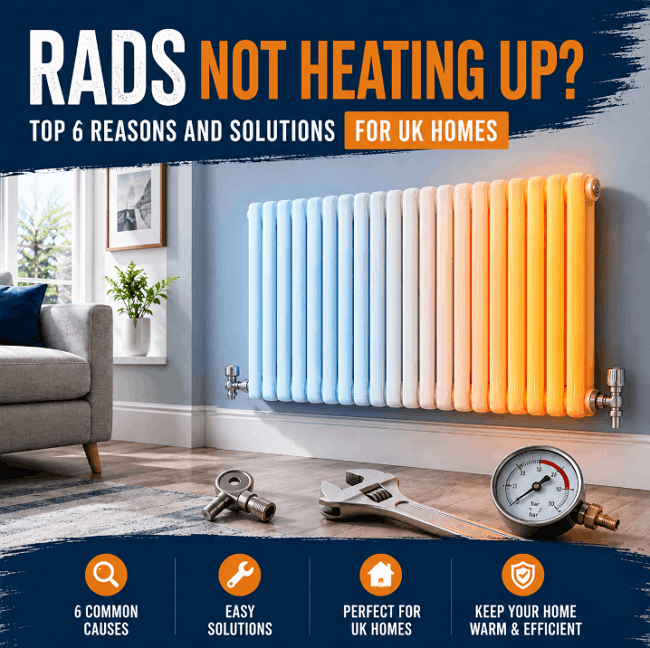
There’s nothing quite like cranking up the central heating on a cold British morning only to find your radiator not warming up. Whether you’re dealing with a single cold spot or multiple rads not heating up, the frustration is real. The good news? Most radiator problems have straightforward solutions you can implement yourself.
Radiators rely on a steady flow of hot water from your boiler. If one or more aren’t heating up, it’s likely due to trapped air, sludge buildup, faulty valves, low boiler pressure, or an unbalanced system. This guide walks you through every possible reason why your radiators are not getting hot and exactly what you can do about it.
Table of Contents
- How Your Central Heating System Works
- Common Reasons Why Radiators Are Not Heating Up
- Troubleshooting: Step-by-Step Guide for Radiators Not Heating Up
- Why Are My Elegant Showers Radiators Not Heating Up?
- One Radiator vs. Multiple Radiators Not Heating Up – What’s the Difference?
- Frequently Asked Questions (FAQs) About Radiators Not Warming Up
- The Final Words
How Your Central Heating System Works
Before diagnosing why a radiator will not heat up, it helps to understand how the system should work. Your central heating operates on a simple loop: the boiler heats water to around 60-70°C, pumps push that hot water through pipes to your radiators, the radiators radiate the heat into your rooms, and the cooled water returns to the boiler to be reheated.
Key components include:
-
The boiler – heats the water
-
Pipes – carry hot water to radiators
-
Radiator body – transfers heat into the room
-
Thermostatic Radiator Valve (TRV) – lets you set the temperature
-
Lockshield valve – balances the system
Understanding these basics helps you pinpoint whether the issue is localised to one radiator or systemic.
Common Reasons Why Radiators Are Not Heating Up
When homeowners search "why are my radiators not getting hot," they usually find themselves trapped in one of six distinct scenarios. Understanding which category your radiator falls into is the key to unlocking a swift and cost-effective fix. Below, we break down the most frequent culprits behind a radiator not warming up, from simple airlocks to complex pump failures.
Trapped Air – The Most Common Culprit
If your radiator is cold at the top but warm at the bottom, trapped air is almost certainly the cause. Air rises and collects at the highest point, creating an airlock that stops hot water from circulating properly. This is the most common radiator problem and one of the easiest to fix – simply bleed the radiator.
Sludge Buildup – The Bottom Cold Spot
A radiator hot at the top but cold at the bottom is a classic sign of sludge buildup. Over time, rust, dirt, and debris accumulate inside radiators, forming magnetite sludge that settles at the base and blocks hot water flow. Over 60% of UK households are in hard water areas, where limescale compounds the problem.
Faulty or Stuck Radiator Valves (TRV and Lockshield)
A stuck radiator valve is one of the single most common reasons a radiator stays stone cold while every other radiator in the house heats up normally. The culprit is usually a seized pin inside the TRV. If the TRV pin is stuck closed, hot water cannot enter the radiator. This often happens after summer when radiators have sat unused for months.
Low Boiler Pressure
If your boiler pressure is too low, it won’t push hot water around the system. The pressure gauge should typically read between 1 and 1.5 bar. Low pressure often occurs after bleeding radiators or if there’s a minor leak.
Unbalanced Heating System
If some radiators are getting too much heat while others are left cold, your system is unbalanced. Radiators closest to the boiler tend to heat up first and take most of the hot water, leaving those further away struggling.
Circulation Pump Issues
The circulation pump is responsible for moving hot water around your heating system. If the pump becomes weak or faulty, certain radiators may not receive enough hot water. Signs include multiple cold radiators, unusual noises, and slow heating throughout the property.
Radiator Cold Spots – What They Tell You
| Symptom | Cause | Fix |
|---|---|---|
| Cold at top, warm at bottom | Trapped air | Bleed the radiator |
| Cold at bottom, warm at top | Sludge buildup | Flush or power flush |
| Entirely cold | Valve issue or system imbalance | Check valves, balance system |
A healthy radiator should feel warm all over from top to bottom when your heating is on.
Troubleshooting: Step-by-Step Guide for Radiators Not heating up
Step 1: Check Your Thermostat and Controls
Ensure your radiator thermostat is on and set above room temperature. Check wireless thermostat batteries and connections.
Step 2: Check Boiler Pressure
Locate the pressure gauge – it should read between 1.0 and 1.5 bar when the system is cold. If it’s below 1 bar, you need to re-pressurise.
Step 3: Check All Radiator Valves Are Open
Turn each TRV anti-clockwise fully to the highest setting. Check that the lockshield valve isn’t closed.
Step 4: Bleed the Radiator
Turn the heating off and allow the radiator to cool completely. Insert a radiator key into the bleed valve and turn anticlockwise slowly until you hear a hissing sound – this is trapped air escaping. Once water flows steadily, close the valve.
Step 5: Check if the Problem Persists
If the radiator is still cold after bleeding, the issue may be sludge, a stuck valve, or an unbalanced system.
Why Are My Elegant Showers Radiators Not Heating Up?
If your Elegant Showers radiator is not heating up properly, there are a few simple things you can check before calling a heating engineer. In many cases, the issue is related to the radiator valves, trapped air, low boiler pressure or poor water circulation.
Follow the steps below to identify the most common causes and get your radiator working properly again.
1. Check the Radiator Valves
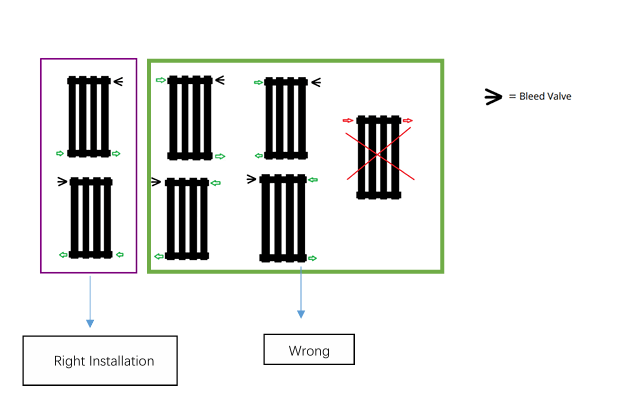
Start by checking both radiator valves. Make sure they are open and have not been accidentally turned off.
If your radiator has a thermostatic radiator valve (TRV), turn it up gradually and check whether the radiator begins to warm up. If the valve feels stuck or does not respond when adjusted, it may need to be checked by a qualified heating professional.
2. Bleed the Radiator
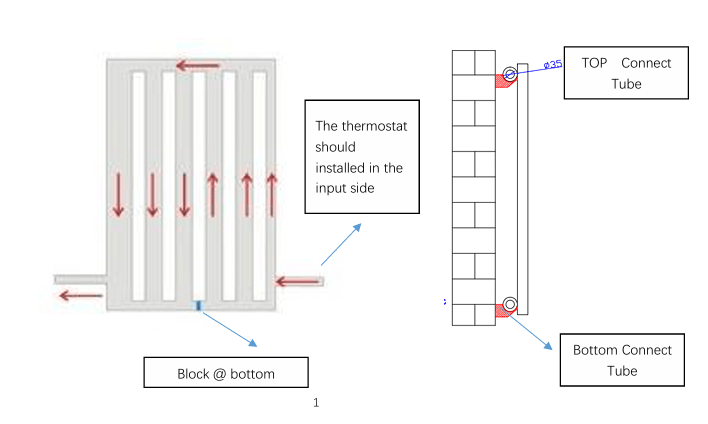
If the top of the radiator feels cold while the bottom is warmer, there may be trapped air inside the radiator. Bleeding the radiator can help release this trapped air and improve heat circulation.
Before bleeding a radiator, switch off the heating and allow the radiator to cool down. Use a suitable radiator key to carefully open the bleed valve and release the trapped air. Close the valve once water begins to flow steadily.
After bleeding the radiator, check your boiler pressure and top it up if necessary, following the boiler manufacturer's instructions.
3. Check the Boiler Pressure
Low boiler pressure can affect the performance of a central heating system and may prevent radiators from heating properly.
Check the pressure gauge on your boiler and compare the reading with the pressure recommended by the manufacturer. If the pressure is too low or keeps dropping, there may be an underlying issue that requires attention from a qualified heating engineer.
4. Check for Cold Spots
The location of a cold spot can provide a useful clue about what is causing the problem.
- Cold at the top: this can indicate trapped air and may mean the radiator needs bleeding.
- Cold at the bottom: this can indicate sludge or sediment build-up inside the radiator.
- Cold across the whole radiator: this may be related to a closed valve, low boiler pressure or a circulation problem.
5. When to Contact a Heating Engineer
If your radiator remains cold after checking the valves, bleeding the radiator and checking the boiler pressure, the problem may be related to the wider central heating system.
If you notice unusual noises, repeated pressure loss, leaks or other signs of a boiler or heating-system fault, it is best to contact a qualified heating engineer rather than attempting further repairs yourself.
Important: Always follow the manufacturer's instructions for your radiator and boiler. If you are unsure about any part of the troubleshooting process, seek advice from a qualified professional.
One Radiator vs. Multiple Radiators Not Heating Up – What’s the Difference?
Before you pick up a radiator key or call a heating engineer, you need to answer one critical question: Is it just one radiator that’s cold, or are several radiators not heating up? The answer to this question determines the entire troubleshooting path and can save you hours of wasted effort.
Scenario 1: Only One Radiator Is Cold
If you have one radiator not warming up while every other radiator in your home gets hot as expected, the problem is almost certainly localised to that single unit. This is actually good news because it means your boiler, pump, and overall system are working correctly. The hot water is being produced and circulated; it’s just not reaching that one specific radiator.
In this scenario, the usual suspects are:
-
Trapped air – an airlock has formed inside that radiator, preventing hot water from filling the top section.
-
Stuck TRV pin – the thermostatic valve has seized in the closed position, usually after months of disuse over the summer.
-
Lockshield valve closed – someone may have accidentally turned off the return valve.
-
Localised sludge blockage – debris has settled in the pipework leading specifically to that radiator.
The fix here is usually straightforward: bleed the radiator, free the valve pin, or check the valve positions. You rarely need to touch the boiler or call an expensive engineer for a single cold radiator.
Scenario 2: Multiple Radiators Are Cold or Lukewarm
If you find that multiple radiators are not heating up, or the entire system is struggling to reach temperature, you are dealing with a systemic issue. This means the problem lies upstream – in the boiler, the pump, or the overall water circulation.
Common systemic causes include:
-
Low boiler pressure – if the pressure gauge drops below 1 bar, the boiler will shut down or fail to push water through the entire circuit.
-
Faulty circulation pump – if the pump is weak, dying, or set to the wrong speed, it won't have enough force to push hot water to radiators on upper floors or at the far ends of the system.
-
System imbalance – radiators closest to the boiler are stealing all the hot water, leaving those further away cold.
-
Air trapped in the system – sometimes air gets sucked into the main pipework, creating a system-wide airlock.
-
Boiler diverter valve fault – in combi boilers, a stuck diverter valve can send hot water to the taps but not to the heating circuit.
-
Frozen condensate pipe – a very common issue during UK winters, causing the boiler to lock out entirely.
How to Quickly Diagnose Which Scenario You Have
Here is a simple 2-minute diagnostic check you can perform:
-
Turn your heating on full and wait 15–20 minutes.
-
Walk around and feel every radiator in the property.
-
If only one is stone cold – proceed to the localised fixes (bleeding, valve checks).
-
If two or more are cold or lukewarm – go straight to checking your boiler pressure and circulation pump.
-
If all radiators are cold but the boiler is running – suspect a pump failure or a diverter valve issue.
Why This Distinction Matters for UK Homes
In the UK, where many homes have combi boilers and microbore piping, systemic issues are more common in older properties with unserviced systems. If you ignore a multi-radiator failure and keep bleeding individual radiators, you'll waste time and lose system pressure. Conversely, calling an engineer for a single cold radiator with a stuck valve is an unnecessary expense when you could fix it yourself in five minutes.
Remember: One cold radiator is a localised nuisance; multiple cold radiators are a system-wide warning. Diagnose correctly, and you'll have your radiators heating up again in no time. If you're still unsure, check your boiler pressure first – it’s the single most common cause of why are my radiators not getting hot when multiple units are affected.
Frequently Asked Questions (FAQs) about Radiators not warning up
How long should a radiator take to heat up fully?
A healthy radiator should feel noticeably warm within 5–10 minutes of turning your heating on and reach its full operating temperature within 15–25 minutes, depending on the system's size and the boiler's output. If your radiator takes over 30 minutes to warm up, suspect sludge buildup slowing the water flow, an incorrectly set circulation pump speed, or an unbalanced system where hot water is being drawn away by radiators closer to the boiler.
How do I know if my radiator needs bleeding?
The telltale sign is a radiator that is cold at the top but warm at the bottom. You may also hear gurgling or bubbling sounds coming from the radiator when the heating is on, which indicates trapped air moving through the water. If your radiator feels unevenly warm or takes an unusually long time to heat up, bleeding should be your first diagnostic step. However, if it's cold at the bottom and warm at the top, bleeding won't help—that's a sludge issue.
Can I bleed a radiator with the heating on?
No. Always turn your central heating off and allow the radiator to cool completely before bleeding. Bleeding with the heating on can cause hot water to spray out under pressure, leading to serious burns. Additionally, with the pump running, air bubbles are actively circulating through the system, making it harder to release them effectively. Turn the heating off, wait 20–30 minutes for the radiator to cool, and then proceed with bleeding.
How often should I bleed my radiators?
You should bleed your radiators whenever you notice cold spots at the top or hear gurgling noises. For most UK households, this means bleeding once a year, ideally at the start of the heating season in autumn. If you have an older system with open-vented pipework, you may need to bleed more frequently—every 6 months. After any plumbing work or system draining, you should also bleed all radiators to remove air introduced during maintenance.
Why are my radiators not getting hot even after bleeding?
Bleeding only solves trapped air. If your radiators are not heating up after bleeding, you need to look deeper. The most common hidden culprit is a seized TRV pin—remove the valve head and gently work the pin up and down with pliers. Alternatively, you may have dropped the boiler pressure too low during bleeding; check your pressure gauge and re-pressurise to 1.5 bar if needed. If neither works, you're likely dealing with sludge buildup or a system imbalance, which requires flushing or balancing rather than further bleeding.
The Final Words
A radiator not warming up is frustrating, but in most cases, the fix is simple. Start by checking your boiler pressure, ensuring all valves are open, and bleeding any radiators with cold tops. If the problem persists, look for sludge buildup at the bottom or consider balancing your system. For complex issues, don't hesitate to call a Gas Safe registered engineer. Regular maintenance – including annual servicing, adding inhibitor, and installing a magnetic filter – will keep your radiators heating up efficiently for years to come.
Ready to Upgrade or Replace Your Radiators?
If your radiators are beyond repair, struggling to heat your rooms adequately, or simply outdated, it might be time to invest in a new, high-performance heating solution. Elegant Showers offers an extensive collection of premium radiators designed to suit every home and budget.
-
Designer Radiators – modern, stylish options that double as decorative features
-
Traditional Cast Iron Style Radiators – classic elegance with contemporary functionality, available in multiple columns, sizes, and colours
-
Panel Radiators – versatile, cost-effective, and available in white and anthracite finishes
-
Towel Radiators – perfect for bathrooms, combining warmth with towel drying functionality
-
Vertical Radiators – ideal for rooms with limited wall space
With numerous shapes, styles, and models available, Elegant Showers makes it easy to find the perfect radiator for your home. All the radiators are suitable for all UK central heating systems, including both tank-fed and combi boiler setups, and come with clear BTU ratings to help you choose the right heat output for every room.
Whether you're replacing a single faulty radiator or upgrading your entire heating system, visit Elegant Showers UK today to explore the full collection and find the ideal solution for your home.




Validate your login