

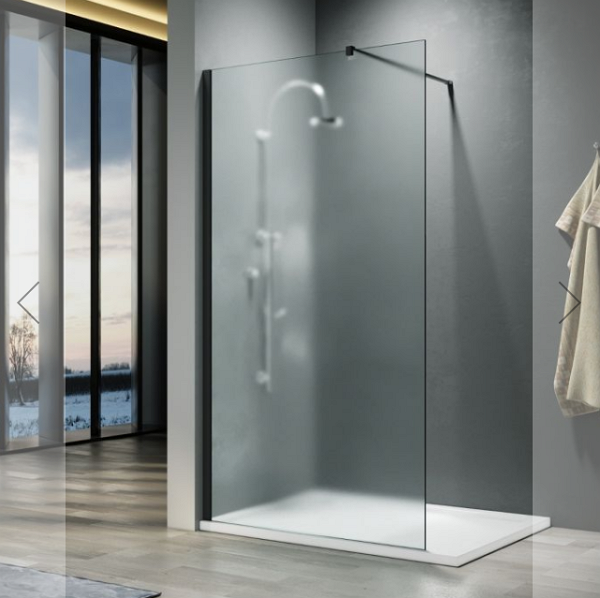
Choosing the right shower screen glass is one of the most important decisions you'll make when designing or renovating a UK bathroom. The thickness of your shower glass doesn't just affect how it looks — it influences durability, safety, ease of cleaning, and even the overall feel of your daily shower experience.
In the UK market, 8mm and 10mm toughened safety glass are the two most popular choices for frameless and walk-in shower enclosures. But which one is right for your bathroom? This comprehensive guide breaks down everything you need to know about 8mm vs 10mm shower screen glass, helping you make an informed decision that balances budget, aesthetics, and practicality for your UK home.
What are Shower Screen Glass Thickness
Common Glass Thicknesses in the UK Market
Shower screen glass in the UK typically comes in four standard thicknesses:
| Thickness | Typical Application |
|---|---|
| 4mm | Lightweight folding screens, budget-friendly options |
| 6mm | Entry-level, framed enclosures, sliding doors |
| 8mm | Mid-range, frameless designs, fixed panels |
| 10mm | Premium/luxury frameless installations, door panels |
| 12mm | Commercial/heavy-duty applications |
Why 8mm and 10mm Are the Focus for UK Bathrooms
8mm and 10mm glass have become the industry standard for frameless walk-in shower designs in the UK. Thicker glass feels more substantial, produces less vibration when the door closes, and delivers a distinctly premium aesthetic that thinner options simply cannot match. For homeowners seeking a modern, minimalist bathroom with a spa-like feel, these thicknesses are the go-to choices.
8mm Shower Screen Glass
8mm glass offers a sturdy, solid feel with minimal wobble, weighing approximately 20 kg per square metre. It provides an excellent balance of strength and affordability, making it suitable for most domestic frameless installations.
Advantages of 8mm Glass
Exceptional Value for Money – 8mm glass sits in the sweet spot between cost and quality. It offers a premium feel without the premium price tag of 10mm. As one supplier notes, 8mm glass is "indulgent, thick – but also affordable".
Excellent Durability – 8mm toughened glass handles daily wear effectively and resists flexing, making it ideal for busy households. It supports frequent use without compromising hinges or seals over time.
Wide Compatibility – 8mm glass works with a broad range of shower hardware, including U-channels, hinges, and support bars. This versatility makes it easier to find matching fixtures and replacement parts.
Suitable for Most Installations – For standard-sized frameless enclosures and walk-in showers, 8mm glass provides more than adequate strength and stability.
Potential Limitations
While 8mm glass performs admirably in most domestic settings, it may flex slightly on very large panels or heavy doors. For oversized installations or where maximum rigidity is desired, 10mm may be the better choice.
10mm Shower Screen Glass
10mm glass represents the pinnacle of shower screen luxury. Weighing approximately 25 kg per square metre, it offers maximum rigidity, stability, and a truly premium feel. In the UK/Europe market, 10mm is positioned as the "designer or luxury option".
Advantages of 10mm Glass
Superior Strength and Durability – 10mm glass shower screens offer superior strength and durability, remaining rigid even under significant pressure. This reduces stress on fixtures and hinges, potentially extending the lifespan of your shower enclosure.
Maximum Stability – The difference between 8mm and 10mm is immediately noticeable. 10mm glass offers a smoother opening, a sturdier feel, and virtually no vibration when the door closes. Many customers upgrade to 10mm purely for the improved feel and quality.
Premium Aesthetic – Thicker glass has a heftier, more luxurious appearance that makes a profound statement in any bathroom. It's the preferred choice for open, minimalist bathrooms where the shower is a focal point.
Ideal for Large Installations – 10mm glass is the standard recommendation for large frameless doors, wet rooms, and commercial applications where maximum strength is required.
Perfect for Glass-to-Glass Assemblies – 10mm is often specified for glass-to-glass situations where panels meet without framing.
Potential Limitations
Higher Cost – 10mm glass is priced significantly higher than 8mm, positioned as a premium/luxury option. For a typical 1200mm x 2000mm panel, 10mm clear glass starts from around £295, compared to approximately £185 for 8mm.
Increased Weight – At 25 kg/m², 10mm glass is substantially heavier, requiring more robust wall fixings and professional installation.
Less Common – 10mm glass is less commonly stocked than 8mm, which may limit availability and increase lead times for custom orders.
Head-to-Head Comparison: 8mm vs 10mm Shower Screen Glass
Structural Integrity and Rigidity
Both 8mm and 10mm glass provide excellent structural integrity, but 10mm offers superior rigidity. The difference is most noticeable when operating shower doors — 10mm glass delivers a smoother, more solid action with virtually no wobble. For fixed panels, 8mm glass is generally sufficient; for doors, 10mm is often preferred.
Aesthetic Appeal and Premium Feel
Thicker glass undeniably looks and feels more luxurious. While 8mm glass offers an indulgent, premium appearance, 10mm takes this to another level with a designer-led, high-end finish. If your bathroom renovation aims for a spa-like, luxury aesthetic, 10mm glass delivers an unmistakable statement.
Weight Comparison and Installation Considerations
| Thickness | Weight per m² | Handling |
|---|---|---|
| 8mm | ~20 kg | Easier to handle, suitable for DIY installation |
| 10mm | ~25 kg | Heavier, typically requires professional installation |
The 25% weight increase of 10mm glass means stronger wall fixings, more robust hardware, and careful installation planning.
Durability and Longevity
All shower glass in the UK must be toughened safety glass manufactured to BS EN 12150. Both 8mm and 10mm glass undergo the same toughening process, making them approximately four to five times stronger than standard annealed glass. However, 10mm's additional thickness provides greater impact resistance and reduced stress on fixtures over time.
Sound and Vibration
10mm glass produces less vibration when the door closes, resulting in quieter operation and a more solid feel. This is particularly noticeable with hinged or sliding shower doors.
Compatibility with Shower Hardware
Both thicknesses support a wide range of fixtures, but 10mm is often specified for glass-to-glass assemblies where panels meet without framing. 8mm and 10mm glass offer more versatile hardware options compared to thinner alternatives.
UK Building Regulations and Safety Standards
BS EN 12150 – Toughened Safety Glass Standard
All glass used in shower enclosures in the UK must be toughened (tempered) safety glass, manufactured to BS EN 12150. This isn't optional — it's a legal requirement under Building Regulations Approved Document N (Glazing — safety in relation to impact, opening and cleaning) and Approved Document K.
Toughened glass shatters into small, relatively harmless pieces rather than dangerous shards when broken. Given that shower enclosures are in a wet, slippery environment where falls and impacts are more likely, this safety characteristic is absolutely essential.
British Standards and Thickness Requirements
Important clarification: British Standards do not specify a minimum thickness for shower glass. Both 8mm and 10mm glass meet all relevant safety requirements when manufactured to BS EN 12150.
Best Practice Recommendations
Industry best practice recommends 8mm as the minimum standard for frameless installations, with 10mm preferred for all frameless designs. Most professional installers recommend a minimum of 8mm for walk-in showers, with 10mm often preferred for added stability.
Key Factors to Consider When Choosing 8mm or 10mm Shower Screen Glass
Bathroom Size and Layout
Larger bathrooms benefit from the visual impact of 10mm glass, which makes a bold design statement. Smaller bathrooms may find 8mm glass perfectly adequate, as thinner glass looks lighter and less imposing.
Shower Enclosure Type
-
Frameless designs: 8mm or 10mm recommended
-
Framed enclosures: 6mm or 8mm sufficient
-
Walk-in showers and wet rooms: 10mm for maximum stability
Door Size and Panel Dimensions
For large or heavy doors, 10mm (or even 12mm) glass is recommended. For narrower panels and fixed screens, 8mm glass provides more than adequate strength.
Budget Considerations
-
8mm: Mid-range, affordable luxury
-
10mm: Premium pricing, luxury investment
6mm glass typically costs 15-25% less than 8mm, while 10mm commands a significant premium over both.
Household Usage and Lifestyle
Busy families will appreciate the durability of 8mm glass, which handles daily wear effectively and resists flexing. High-traffic bathrooms may benefit from 10mm's extra rigidity and reduced stress on fixtures.
Cost Comparison: 8mm vs 10mm Shower Glass
Price Positioning in the UK Market
| Thickness | Price Range (900mm x 2000mm panel) | Positioning |
|---|---|---|
| 6mm | Most affordable | Entry-level |
| 8mm | From ~£185 | Mid-range |
| 10mm | From ~£295 | Premium/Luxury |
Factors Influencing Cost
Glass thickness directly impacts price, with 10mm commanding a significant premium. Custom sizing, low-iron glass, and easy-clean coatings add additional cost.
Long-Term Value
While 10mm glass requires a higher initial investment, its superior durability and reduced stress on fixtures may offer better long-term value in high-use applications. 8mm glass provides an excellent balance of cost and performance for most UK households.
Which Is Best for Your UK Bathroom? – Decision Guide
| Scenario | Recommended Thickness | Rationale |
|---|---|---|
| Standard domestic bathroom, framed enclosure | 6mm or 8mm | Cost-effective, sufficient strength |
| Frameless walk-in shower, standard size | 8mm | Best balance of cost and performance |
| Large frameless door, luxury bathroom | 10mm | Maximum rigidity and premium feel |
| Wet room, minimal bracing | 10mm | Maximum strength for safety |
| Busy family bathroom | 8mm minimum | Durability for daily use |
| Commercial or high-end installation | 10mm | Superior strength, luxury finish |
Expert Recommendations and Industry Best Practices
-
Most UK installations use 8mm glass for fixed panels and 10mm for door panels
-
Some luxury installations specify 10mm throughout
-
Low-iron glass is recommended for frameless applications to eliminate green tint
-
All glass must be toughened to BS EN 12150
-
Professional installation is recommended for 10mm glass due to its weight
-
Easy-clean coating adds significant long-term value and is often included as standard
Frequently Asked Questions (FAQs) about Shower Screen Glass
Is 10mm shower glass better than 8mm?
Yes, 10mm glass is objectively better in terms of strength, rigidity, and overall performance. However, "better" depends entirely on your specific needs, budget, and bathroom configuration.
Why 10mm is considered superior:
-
Structural integrity: 10mm glass offers maximum rigidity with virtually no flex or wobble. When you operate a 10mm shower door, the action feels smooth, substantial, and premium. The glass remains completely stable even with heavy daily use.
-
Reduced vibration: Thicker glass absorbs more energy, meaning less vibration when the door closes. This results in quieter operation and reduced stress on hinges and fixings over time.
-
Premium aesthetic: The visual and tactile difference is immediately noticeable. 10mm glass has a heftier, more luxurious appearance that makes a statement in any bathroom. It conveys quality and permanence.
-
Long-term durability: The additional thickness provides greater impact resistance and reduces the risk of damage from accidental knocks. This can be particularly valuable in busy family bathrooms or high-traffic installations.
When 8mm is the better choice:
-
Budget constraints: 8mm glass typically costs significantly less than 10mm – often £100-£150 less per panel.
-
Standard installations: For most domestic frameless enclosures with standard-sized panels, 8mm glass provides more than adequate strength and stability.
-
Ease of installation: 8mm glass is lighter and easier to handle, making it more suitable for DIY installation or situations where wall strength is a concern.
The verdict: If budget allows and you're installing a large frameless door or wet room, 10mm is the superior choice. For standard domestic bathrooms, 8mm offers an excellent balance of performance and value.
What thickness shower glass is best for a frameless shower?
For a frameless shower enclosure, 8mm or 10mm are the recommended thicknesses, with the specific choice depending on the application.
8mm glass for frameless showers:
-
Best for: Fixed panels, standard-sized enclosures, and walk-in showers where the glass is supported on two or three sides.
-
Why: 8mm glass provides sufficient rigidity for most domestic installations while remaining more affordable and easier to handle than 10mm.
-
Limitations: On very large panels or doors, 8mm glass may exhibit slight flex, which can affect the smooth operation of hinges over time.
10mm glass for frameless showers:
-
Best for: Shower doors, large panels (over 900mm wide), wet rooms, and glass-to-glass assemblies where panels meet without framing.
-
Why: 10mm glass offers maximum rigidity, ensuring smooth door operation with no wobble or vibration. It's the preferred choice for luxury installations where the shower is a focal point.
-
Professional recommendation: Many installers recommend 10mm for all frameless designs, as it provides the best long-term performance and reduces stress on hinges and seals.
Industry best practice:
-
Fixed panels: 8mm is often sufficient
-
Door panels: 10mm is often preferred
-
Wet rooms with minimal bracing: 10mm is highly recommended
Which thickness is best for a wet room screen?
10mm glass is highly recommended for wet room screens. In fact, many professional installers consider 10mm the minimum acceptable thickness for wet room applications.
Why 10mm is preferred for wet rooms:
-
Minimal bracing: Unlike shower enclosures that are supported by walls on two or three sides, wet room screens are often free-standing or supported only on one side. This means the glass must be strong enough to stand independently without flexing.
-
Maximum rigidity: The larger, unsupported panels used in wet rooms require maximum rigidity to prevent wobble and ensure safety. 10mm glass provides this rigidity.
-
Impact resistance: Wet rooms are often in open-plan bathrooms where there's more space for movement. The increased impact resistance of 10mm glass provides additional safety.
-
Premium aesthetic: Wet rooms are typically high-end, design-led spaces. The substantial feel of 10mm glass complements the contemporary, minimalist aesthetic.
When 8mm might be acceptable:
-
Small wet rooms: For very small wet rooms with narrow panels and significant support, 8mm glass may be sufficient.
-
Budget constraints: If budget is a major concern, 8mm glass can work, but it's not ideal.
Real-world recommendation:
-
Fixed screens: 10mm is strongly recommended
-
Glass doors in wet rooms: 10mm is essential
-
Open-plan layouts: 10mm or even 12mm for very large installations
Safety considerations:
Wet rooms are inherently slippery environments. The glass screen must be robust enough to withstand accidental impacts. Thicker glass not only provides greater strength but also reduces the risk of breakage, ensuring long-term safety.
Can I use 8mm glass for a shower door?
Yes, 8mm glass is perfectly suitable for shower doors in standard domestic settings. It provides sufficient strength and stability for daily use, with minimal flex or vibration. For a typical 700mm to 900mm wide shower door in a standard bathroom, 8mm glass performs admirably. However, for larger or heavier doors exceeding 900mm in width, 10mm glass is recommended to prevent sagging, reduce stress on hinges, and ensure smooth operation over many years. If you have a particularly tall door or a wet room with minimal bracing, 10mm offers additional peace of mind and longevity.
Does thicker glass reduce noise and vibration?
Yes, thicker glass significantly reduces noise and vibration. When a shower door is opened or closed, 10mm glass produces noticeably less vibration than 8mm glass, resulting in quieter operation and a more solid, reassuring feel. This is due to the increased mass and rigidity of the thicker glass, which dampens sound and movement more effectively. Many customers who upgrade to 10mm glass specifically cite the improved acoustic and tactile experience as a key benefit. This is particularly valuable in ensuite bathrooms where a quieter door operation is appreciated during early mornings or late nights.
Ready to Find Your Perfect Shower Screen?
If you're still unsure whether 8mm or 10mm glass is right for your bathroom, or if you'd like to explore the full range of options available, visit Elegant Showers today. They offer an extensive selection of high-quality 8mm and 10mm shower screens, including frameless designs, walk-in enclosures, and wet room solutions, all manufactured to the highest UK safety standards.
Why choose Elegant Showers?
-
Wide range of 8mm and 10mm toughened safety glass options
-
Premium easy-clean coatings available as standard on many models
-
Low-iron (ultra-clear) glass for perfect transparency
-
Competitive pricing with no compromise on quality
-
Expert advice to help you make the right choice
-
Professional installation options available
Take the next step towards your dream bathroom:

Validate your login