

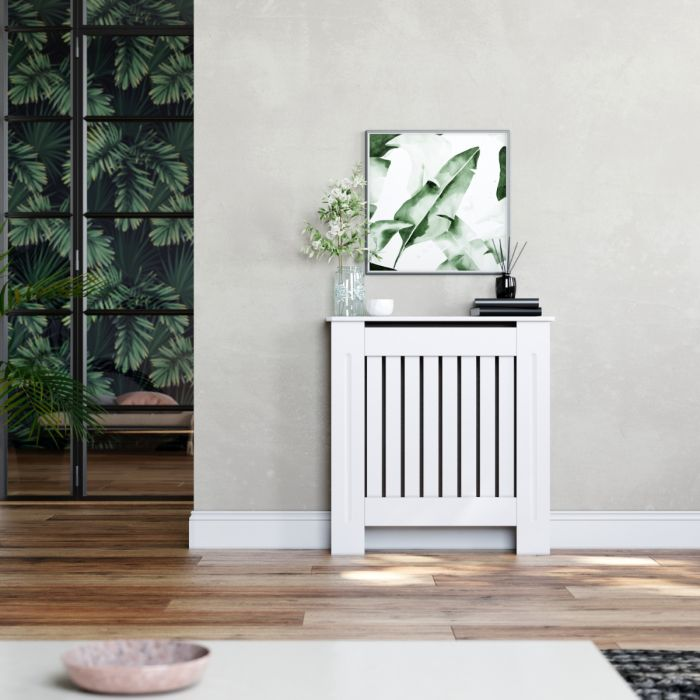
As energy bills continue to rise across the United Kingdom, homeowners are increasingly questioning every aspect of their heating systems. One common dilemma is whether those stylish radiator covers—popular for hiding unsightly radiators, improving interior design, and keeping children safe from hot surfaces—are secretly costing you money .
The question "do radiator covers block heat?" is one that sparks debate in households up and down the country. The short answer is yes, radiator covers can block heat, but the extent varies dramatically depending on design, materials, and installation . A poorly chosen cover could mean your boiler works harder for longer, while a well-designed energy-efficient radiator cover maintains comfort without compromising on style.
This comprehensive guide examines the latest UK research, expert heating engineer advice, and practical considerations to help you make an informed decision that keeps your home warm and your energy bills under control.
How Radiators Really Heat Your Room
Despite their name, radiators primarily heat rooms through convection rather than radiation. Typically, 70-80% of a radiator's heat output comes from convection—the process where warm air rises from the top of the radiator, drawing cooler air up from the floor to replace it . This constant circulation creates the comfortable ambient temperature we feel in a warm room.
The remaining 20-30% comes from radiation—infrared waves that travel directly from the hot surface to objects and people in the room. A small amount of heat is also lost through conduction to the wall mounting brackets.
The Blocking Effect: How Covers Disrupt Airflow
When you place a cover over a radiator, you introduce a physical barrier that fundamentally alters this carefully balanced heating mechanism. If a cover has a solid top or insufficient ventilation, hot air becomes trapped inside the cabinet rather than rising and circulating throughout the room .
Thermostatic Radiator Valve complications add another layer of concern. If the TRV sensor sits inside a hot radiator cover, it detects the warm temperature inside the cabinet and signals the valve to shut off—even when the rest of the room remains cold . This premature shut-off means your heating system stops running while you're still feeling chilly.
Do Radiator Covers Block Heat? Analysing the Evidence
Yes, but it varies. All radiator covers reduce heat output to some extent. Based on standard industry testing conditions, heat loss can range from as little as 5% with well-ventilated designs up to 25% or more with solid, enclosed cabinets . This reduction means your heating system must run longer to achieve the desired temperature, directly impacting energy consumption and bills.
Research Spotlight: Liverpool John Moores University Study
Groundbreaking research from Liverpool John Moores University provides valuable insights into radiator cover performance. The study, published in Energy and Buildings, investigated how heat output from low-pressure hot water radiators is affected by different cover types .
Researchers compared bare radiators against those fitted with magnetic decorative covers and traditional wooden enclosures. The results were striking: magnetically applied radiator covers demonstrated 13-20% greater efficiency relative to traditional wooden covers . This improvement means that in terms of space heating, magnetic covers can reduce the energy input needed to achieve comfortable room temperatures, offering improved heating system energy performance.
Quantifying Heat Loss by Cover Type
The following comparison helps visualise how different designs perform :
| Cover Type | Expected Heat Loss | Airflow Rating | Notes |
|---|---|---|---|
| Solid front, closed top | High | Poor | Warm air trapped inside; room heats slowly |
| Solid front, open top | Medium | Fair | Some airflow but restricted at sides |
| Slatted or perforated front with open top | Low | Good | Allows warm air to rise and circulate effectively |
| Floating shelf only (no cabinet) | Very low | Very good | Minimal airflow obstruction |
Factors That Determine How Much Heat a Cover Blocks
Not all radiator covers are created equal. The difference between a cover that merely looks good and one that performs well comes down to several critical factors. Understanding these variables allows you to evaluate existing covers and make informed choices about new purchases. The extent of heat loss—ranging from as little as 5% to as much as 25% —depends on the interplay between design, materials, installation, and your specific heating system.
Design and Ventilation: The Critical Role of Airflow
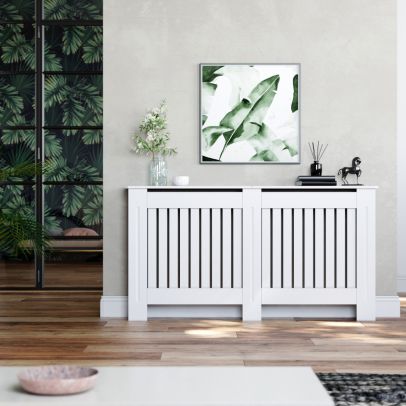
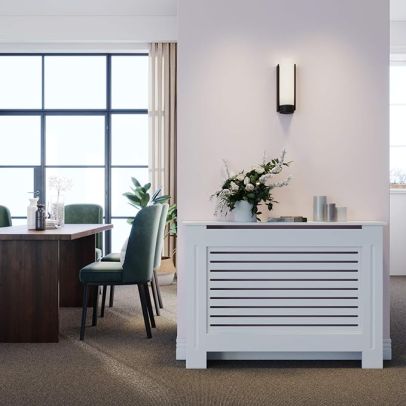
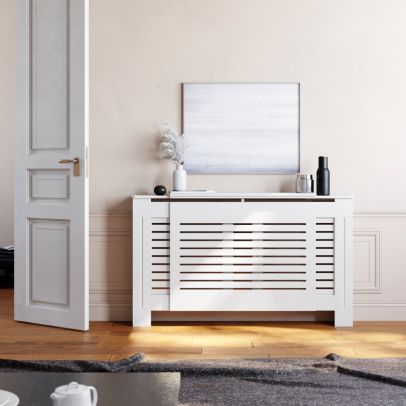
Airflow is absolutely paramount. Radiators need to breathe, and covers must facilitate the natural convection cycle. Perforated panels, slatted fronts, and open-top designs allow warm air to escape and cool air to enter, maintaining efficient heat circulation .
The most efficient covers feature wide top openings and ventilated fronts that minimise airflow resistance. Some manufacturers, like Contour Heating Products, design Low Surface Temperature covers specifically for schools and healthcare settings that maintain heat output while ensuring safety .
Material Matters
The material your cover is made from significantly affects thermal performance:
Wood and MDF act as natural insulators. Thick solid wood absorbs heat rather than transmitting it into the room, requiring substantial ventilation to compensate . The LJMU research confirmed that traditional wooden covers significantly reduced efficiency compared to alternatives .
Metal covers (steel or aluminium) conduct heat well. Perforated metal designs allow heat to pass through quickly while providing a stylish, modern appearance.
Magnetic fabric covers represent an innovative alternative. The LJMU study demonstrated that these thin-profile covers can actually improve efficiency relative to wooden alternatives by directing heat forward rather than absorbing it into the wall .
Glass covers offer aesthetic appeal but can act as thermal barriers unless properly ventilated.
Fit and Placement
A cover that fits too tightly chokes the radiator. Industry recommendations suggest allowing at least:
-
20mm (2cm) gap on either side of the radiator
-
30mm (3cm) gap at the top
If possible, choose a cover slightly larger than these minimum clearances to allow more room for warm air circulation . Additionally, furniture placement matters immensely—even the best-designed cover cannot compensate for sofas or curtains blocking the front.
Wall Insulation and Heat Loss
The position of radiators against exterior walls creates another consideration. Some experts suggest that covers can trap heat against external walls, potentially increasing heat loss through the wall to the outside . This reinforces the importance of proper wall insulation and reflective barriers behind radiators.
How to Choose an Energy-Efficient Radiator Cover
Armed with an understanding of how heat moves and what causes blockage, you can now make an informed purchasing decision. Choosing the right radiator cover involves balancing aesthetics, safety, and thermal performance. This section provides a comprehensive framework for selecting a cover that keeps your home warm without compromising on style.
Prioritise Open-Top Designs
The top opening is non-negotiable. Heat rises, so the cover must allow this rising warm air to escape freely into the room . Look for covers with fully open tops or large mesh grilles that don't impede airflow.
Seek Perforated or Slatted Fronts
Avoid solid MDF front panels. Instead, choose covers with lattice work, horizontal slats, or perforated metal fronts that allow lateral airflow . These designs mimic the open environment radiators need for effective convection.
Ensure TRV Accessibility
Verify that the cover design allows the thermostatic radiator valve to remain exposed or at least accessible . Enclosing the TRV leads to premature shut-off and uneven heating throughout your home.
Consider Custom or Bespoke Designs
Many UK homes feature alcoves or non-standard radiator sizes. Bespoke radiator cabinets can be designed with precise ventilation gaps, often performing better than generic one-size-fits-all solutions. Professional manufacturers like Contour offer custom solutions for commercial and residential applications .
Install Reflective Panels
Adding radiator reflector foil behind the radiator (or inside the cover) significantly improves efficiency. These metallised polyester and polyethylene foam rolls reflect heat back into the room rather than letting it escape through external walls .
Research indicates that fitting reflective insulation behind a radiator can cut heat loss by up to 50% . With a core R-value of 1.39 m²K/W, these inexpensive panels represent one of the most cost-effective energy-saving measures available . The Contour LST covers incorporate interior Kingspan foam insulation that reflects heat that would otherwise be lost back into the room—retaining around 45% of heat that would otherwise escape.
Quick Reference: Energy-Efficient Cover Checklist
Use this checklist when evaluating potential radiator covers:
| Consideration | What to Look For | Why It Matters |
|---|---|---|
| Top Ventilation | Open top or large mesh grille | Allows rising hot air to escape |
| Front Ventilation | Slats, perforations, or grilles | Enables convection cycle |
| Material | Metal > Thin fabric > Well-ventilated wood | Determines heat transmission |
| TRV Access | Exposed valve or remote sensor provision | Prevents premature radiator shut-off |
| Internal Clearance | At least 20mm sides, 30mm top | Ensures adequate airflow around radiator |
| Reflective Panel | Purpose-made foil behind radiator | Reflects heat back into room |
| Fit | Bespoke or correctly sized | Maximises efficiency and appearance |
Where to Find Quality Radiator Covers
For UK homeowners seeking energy-efficient radiator covers, several options exist:
-
Specialist manufacturers like Contour Heating offer bespoke solutions with integrated TRV options and reflective panels
-
DIY stores carry standard sizes and materials for those who prefer ready-made options
-
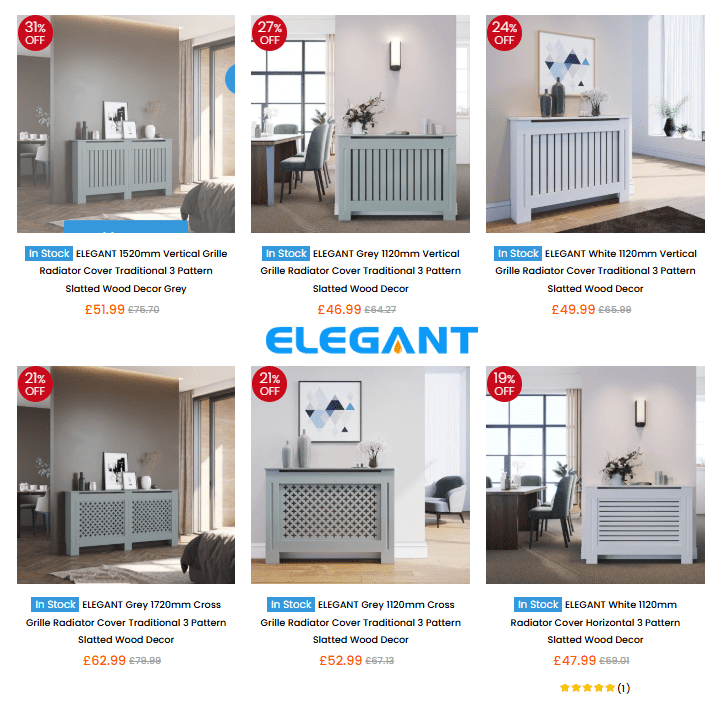
Online retailers such as Elegant Showers provide curated collections of modern and traditional designs
-
DIY builds allow complete customisation; the Evolution Power Tools guide demonstrates how to build a slatted wooden cover with adequate ventilation
Making Your Current Cover More Efficient
If removing your existing radiator cover isn't an option—whether for aesthetic, safety, or budgetary reasons—don't despair. There are several practical, often low-cost measures you can take to significantly enhance its thermal performance and stop it from sabotaging your heating system. By approaching this as a troubleshooting mission, you can often reclaim lost heat without sacrificing your interior design.
Quick Improvements
Move furniture away. Ensure sofas, chairs, and cabinets do not block the cover's front or sides .
Check curtains. Long curtains hanging over the cover trap rising warm air. Ensure curtains sit above or behind the cover.
Verify TRV exposure. Confirm the thermostatic radiator valve sensor isn't fully enclosed within the cover.
Remove decorative items. Objects placed on top of the cover can block the grille and restrict airflow .
Install reflective foil. Adding reflector foil behind the radiator (accessible through the cover) bounces heat forward .
When Improvements May Not Suffice
Despite your best efforts, some covers are fundamentally flawed for certain applications. Recognising when to stop optimising and start replacing is crucial.
The Undersized Radiator Problem: If your room is large or particularly cold, the radiator itself may be operating at its maximum capacity. In this scenario, any heat loss caused by the cover—even just 5-10%—can be the difference between a warm room and a chilly one. The radiator simply doesn't have the extra output to compensate for the obstruction.
The Modern Heating System Conflict: This is becoming increasingly relevant in the UK as homes move away from gas boilers. Modern heating systems, particularly air source heat pumps, operate at much lower flow temperatures than traditional boilers. They are designed to heat a home gently and constantly. These systems are far less tolerant of obstructions like radiator covers. A cover that is acceptable with a high-temperature gas boiler could cripple the performance of a heat pump system.
Signs You Need a New Cover:
-
The room consistently feels cold even after the heating has been on for hours.
-
Your boiler is cycling on and off frequently (short-cycling) because the TRV is boxed in.
-
You have tried all the above tips with no noticeable improvement.
-
The cover is made of thick, solid wood with minimal ventilation and cannot be modified.
Frequently Asked Questions
Do radiator covers make radiators less effective?
Yes, they can if poorly designed. Covers with solid tops and limited ventilation trap heat, preventing proper convection . However, covers with open tops and perforated fronts have minimal effect on effectiveness—some innovative magnetic designs even outperform traditional wooden covers .
How much heat does a radiator cover block?
Studies indicate radiator covers can block between 5% and 25% of heat output, depending on ventilation, materials, and fit . Wooden covers tend to block more heat than metal or thin magnetic covers .
Do radiator covers cause condensation?
Rarely, but if a cover severely restricts airflow in a poorly insulated room, it can contribute to cold spots where condensation may form. Ensuring adequate airflow minimises this risk.
Are there radiator covers that don't block heat?
Look for Low Surface Temperature designs, covers with large perforated areas and open tops, or magnetic fabric covers that the LJMU study found performed well . Freestanding covers that don't fit tightly to the wall also allow better airflow .
Can I put things on top of my radiator cover?
Yes, but avoid solid fabric items that hang over the edge and block rising air. Suitable items include wicker baskets, slim books, or ornaments that allow air to pass around them .
What's the correct way to measure for a radiator cover?
The best way to measure your radiator is from one side valve to the other, then add 40mm (4cm). Measure from floor to top of radiator, then add 30mm (3cm). These minimum dimensions ensure adequate clearance .
Conclusion
The question "do radiator covers block heat?" cannot be answered with a simple yes or no. The reality depends entirely on design, materials, installation, and your specific heating system.
Solid, enclosed covers with poor ventilation can significantly reduce heat output, waste energy, and leave rooms feeling chilly. However, well-designed covers with open tops, perforated fronts, adequate clearance, and reflective backing can maintain excellent heating performance while providing aesthetic appeal and safety benefits.
The Liverpool John Moores University research offers encouraging evidence that innovative cover designs—particularly magnetic fabric options—can outperform traditional wooden alternatives, potentially reducing the energy input needed for comfort .
When choosing a radiator cover for your UK home, prioritise ventilation, material, and fit over pure aesthetics. Measure carefully, verify TRV accessibility, and consider adding reflective foil behind the radiator .
Ready to find the perfect balance between style and efficiency? Explore a stunning collection of radiator covers, modern heating solutions, and expert design ideas at Elegant Showers . Whether you're seeking contemporary perforated metal designs, traditional wooden enclosures, or innovative low-surface-temperature options, their curated range offers energy-efficient solutions that complement every interior while keeping your home comfortably warm.




Validate your login