

Picture this: your toddler is playing in the living room, laughing and running around. Suddenly, they stumble toward the radiator. Your heart skips a beat. Will they burn their hand on the hot metal? Will they bump their head on a sharp corner?
This is a worry that keeps many parents up at night. It's why so many families consider installing radiator covers. But this leads to another important question: Are radiator covers safe?
The answer isn't as simple as yes or no. Radiator covers can protect your children, but only if you choose the right one. A poorly designed cover might create new hazards instead of eliminating them.
This guide will help you understand the safety of radiator covers. We'll look at three critical areas: heat management, physical design, and material choices. By the end, you'll know exactly what to look for when protecting your family.
Are Radiator Covers Safe? The Core Safety Analysis
Let's get straight to the point. Radiator covers can be safe for your family. However, this safety depends entirely on how they're designed and installed.
Think of radiator safety as a three-legged stool. If any leg is weak, the whole thing becomes unstable. The same applies to radiator covers. Three pillars determine whether a cover protects your children or puts them at risk.
The first pillar is heat management. Does the cover reduce the risk of burns, or does it trap heat and become dangerously hot itself? The second pillar is physical design. Are there sharp edges and corners that could hurt a curious child? The third pillar is material choice. Is the cover made from materials that are toxic or flammable when heated?
Each of these pillars matters equally. A cover might have perfectly rounded corners, but if it gets scalding hot, it's still dangerous. Similarly, a cool-to-touch cover won't help if it has sharp metal edges at your child's eye level.
In the following sections, we'll examine each pillar in detail. You'll learn what makes a radiator cover truly safe and how to spot potential dangers before they become problems.
Radiator Cover Heat Safety: Preventing Burn Risks
Here's a surprising fact: a badly designed radiator cover can actually become hotter than the radiator itself. This happens when heat gets trapped inside the cover with nowhere to go.
Key Design Features for Heat Safety
The key principle is simple. A radiator safety cover should reduce the surface temperature, not contain and superheat it. Think of it like a greenhouse. If you trap heat without allowing circulation, temperatures rise to dangerous levels.
Adequate Ventilation
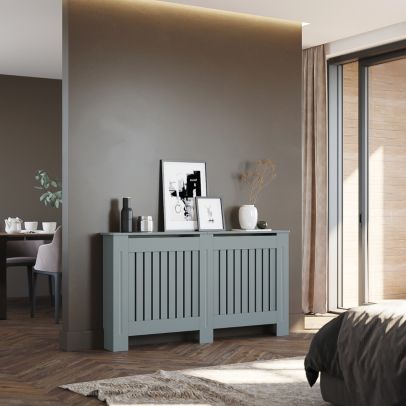
Proper ventilation is the most important safety feature of any radiator cover. Without it, everything else doesn't matter. Good covers have large gaps, louvred slats, or mesh panels at both the top and bottom. These aren't just design choices. They're essential safety features.
The Convection Current
Hot air naturally rises. This basic physics principle is what makes radiator covers work safely. Cool air enters through gaps at the bottom of the cover. As it passes the radiator, it warms up. This warm air then rises and exits through openings at the top. This process is called convection, and it's constantly moving air through the cover.
When this convection current works properly, the cover surface stays much cooler than the radiator inside. Your child can safely touch the cover without risk of burns. But if ventilation is blocked or insufficient, heat builds up. The cover surface gets dangerously hot. This defeats the entire purpose of having a cover in the first place.
Material Matters
The material of your cover also affects heat transfer. Metal covers conduct heat more efficiently than wood or MDF. This might sound like a problem, but it's actually helpful. Metal disperses heat across its surface rather than creating hot spots. This means the cover stays warm but rarely reaches scalding temperatures.
Wooden covers and those made from MDF conduct heat more slowly. They need even better ventilation to work safely. The trade-off is that they often stay cooler to the touch once properly ventilated.
The Danger of Poor Design
Be extremely cautious of covers with poor ventilation design. Some decorative covers prioritize looks over safety. They might have small, inadequate gaps or solid panels that block airflow. These covers can damage your radiator, reduce your home's heating efficiency, and create serious burn risks for children.
Childproofing Your Radiator Cover: Sharp Edges and Corners
Burns aren't the only danger lurking around radiators. Sharp corners and rough edges pose their own serious risks to young children.
Consider your toddler's height. Those sharp corners on a radiator cover sit right at their eye level. If they fall or run into the cover, the results could be devastating. Even without a fall, curious little hands often explore surfaces by touch. Rough, splintered edges can cause painful cuts and splinters.
Safety First Design Solutions
Safety-conscious manufacturers understand these risks. They design covers with rounded corners as standard. These soft-edged corners absorb impact rather than concentrating force at a single point. If your child bumps into a rounded corner, they might get a bruise. If they hit a sharp corner, they could need stitches.
The finish quality matters just as much as the shape. A well-made cover should have a smooth surface everywhere your child might touch. This is especially important for wooden and MDF covers. The manufacturing process can leave rough patches, sharp edges from cuts, or splinters waiting to happen.
High-quality covers go through careful sanding before painting. Multiple coats of paint create a smooth, protective barrier. This seals any rough wood fibres and prevents splinters. A white radiator cover often uses multiple layers of paint, which provides excellent smoothness and protection.
What if you already have a cover with sharp edges? You don't necessarily need to replace it. Corner guards and edge protectors offer an affordable solution. These soft plastic or rubber additions stick onto existing corners and edges. They provide the protection your cover should have had from the start.
Before purchasing any corner guards, check that they're heat-resistant. Standard corner protectors designed for furniture might soften or melt when exposed to radiator heat. Look for products specifically rated for use near heat sources.
Radiator Cover Material Choices: Wood, MDF, and Metal
The material of your radiator cover affects both safety and performance. Each common material has advantages and potential problems you need to understand.
Solid Hardwood
Solid hardwood covers represent the premium option. They're incredibly durable and can last for decades. Wood is a natural insulator, which means it doesn't conduct heat as readily as metal. This keeps the outer surface cooler. However, wood expands and contracts with temperature changes. This can cause warping over time if the cover isn't properly sealed.
The seals and paints used on wooden covers matter enormously. You need non-toxic finishes that won't release harmful chemicals when heated. Some traditional wood stains and varnishes contain volatile organic compounds that off-gas when warm. Always verify that the finish is safe for heated applications and child-friendly environments.
MDF
MDF covers dominate the market because they're affordable and easy to manufacture. They work perfectly well in most homes, but quality varies dramatically between manufacturers. High-grade MDF with proper heat-resistant paint is completely safe. Cheap MDF is a different story.
The problem with low-quality MDF is formaldehyde. This chemical binds the wood fibres together during manufacturing. When heated repeatedly, poor-grade MDF can release formaldehyde gas into your home. This isn't just unpleasant. It's a known health hazard, especially for children.
If you choose an MDF cover, buy from reputable retailers who specify the use of low-formaldehyde or formaldehyde-free MDF. The paint matters too. It should be specifically formulated for high-temperature applications. This prevents the paint from breaking down, cracking, or releasing fumes when heated.
Metal Covers
Metal covers, typically made from steel or aluminum, excel at heat dissipation. They transfer heat away from the radiator efficiently, preventing dangerous hot spots. Metal is also incredibly durable. It won't warp, split, or splinter like wood-based materials might.
The main concern with metal covers is edge safety. Manufacturing metal involves cutting and bending, which can create razor-sharp edges. Quality metal covers have rolled or folded edges. This manufacturing technique curls the metal back on itself, eliminating sharp edges entirely.
Metal covers do get warm to the touch, but they rarely reach scalding temperatures. The excellent heat conductivity that makes them warm also prevents extreme temperature buildup. The warmth spreads evenly across the entire cover surface rather than concentrating in one spot.
For most families, well-constructed MDF or metal covers from reputable manufacturers offer the best combination of safety, performance, and value. Wooden covers work wonderfully if your budget allows, but they're not necessary for safety.
How to Choose a Safe Radiator Cover for Your Family
You now understand what makes radiator covers dangerous and what makes them safe. Let's put this knowledge into practice with a practical buyer's guide.
The Essential Safety Checklist
Start with ventilation. This cannot be emphasized enough. Examine the cover carefully. Does it have substantial gaps at both the top and bottom? Can you see how air would flow through it? If ventilation looks minimal or blocked, walk away regardless of how attractive the cover looks.
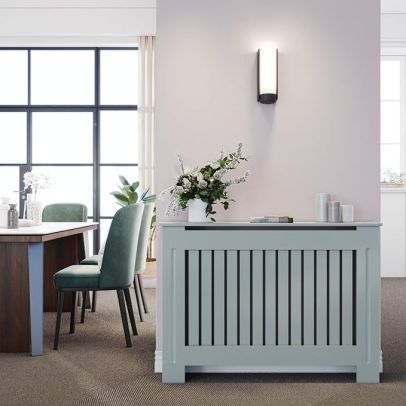
Secure fitting is your second priority. The cover must attach firmly to the wall. Freestanding covers or those that simply hook over the radiator can tip over. This creates both burn risks and crushing hazards. Adjustable radiator covers are excellent because they can be customized to fit your exact radiator dimensions. This ensures a stable, secure installation.
Physically inspect the finish and corners. Run your hand along all edges and corners. Do you feel any rough spots, sharp edges, or potential splinter points? Check corners especially carefully. They should be noticeably rounded, not angular.
Look for non-toxic certifications. Reputable manufacturers will specify that their paints and materials are certified safe for children's environments. Search for mentions of low VOC or zero VOC ratings. VOC stands for volatile organic compounds, which are chemicals that evaporate into the air when heated.
Size matters for safety. A cover that's too small might not provide adequate ventilation space. One that's too large might be unstable or poorly fitted. This is why adjustable radiator covers have become so popular. They expand or contract to fit your specific radiator perfectly. This custom fit maximizes safe airflow while ensuring stability.
Are White Radiator Covers a Safe Choice?
Many parents search specifically for white radiator covers. This makes sense because white matches most decors and looks clean and fresh. But does colour affect safety?
The colour itself doesn't determine safety. A white cover isn't inherently safer than a different colour. However, there's a practical reason why white covers are often a good choice.
White paint is typically a heat-resistant, non-toxic formulation. Manufacturers know that white is the most popular colour choice. They usually use their best quality paints for white finishes. These paints are formulated to withstand repeated heating cycles without yellowing, cracking, or breaking down.
This doesn't mean all white covers are automatically safe. You still need to check all the other safety features we've discussed. But a white radiator cover from a reputable manufacturer is very likely to have a safe, non-toxic finish that performs well under heat.
Conclusion
Radiator covers can be both stylish and safe additions to your family home. The key is knowing what to look for and refusing to compromise on safety features.
Remember the three pillars of radiator cover safety. First, prioritize ventilation above everything else. Second, inspect edges and corners to ensure they're smooth and rounded. Third, verify that materials and finishes are non-toxic and appropriate for heated applications. Add secure installation to this list, and you have a complete safety framework.
The good news is that many modern radiator covers are designed with these safety considerations built in. Manufacturers understand that parents need protection for their children, not just decoration for their walls. You don't have to sacrifice style for safety or vice versa.
Use this guide as your reference when shopping. Don't let sales pressure or attractive designs distract you from the essential safety checklist. Your child's safety depends on making an informed, careful choice.
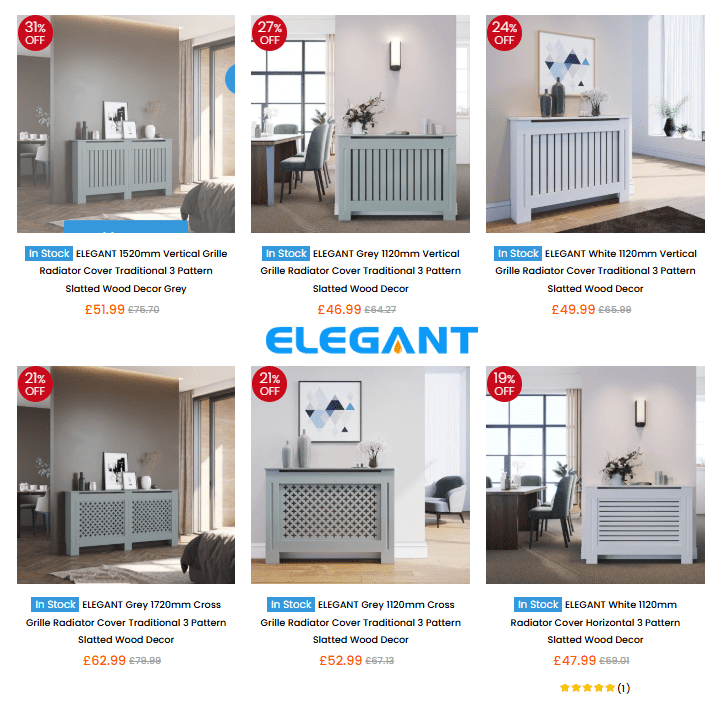
Visit Elegant Showers UK Online Shop for more radiator cover solutions with professional consultation. Our experts can help you find the perfect balance of safety, function, and style for your family's needs.


Validate your login