

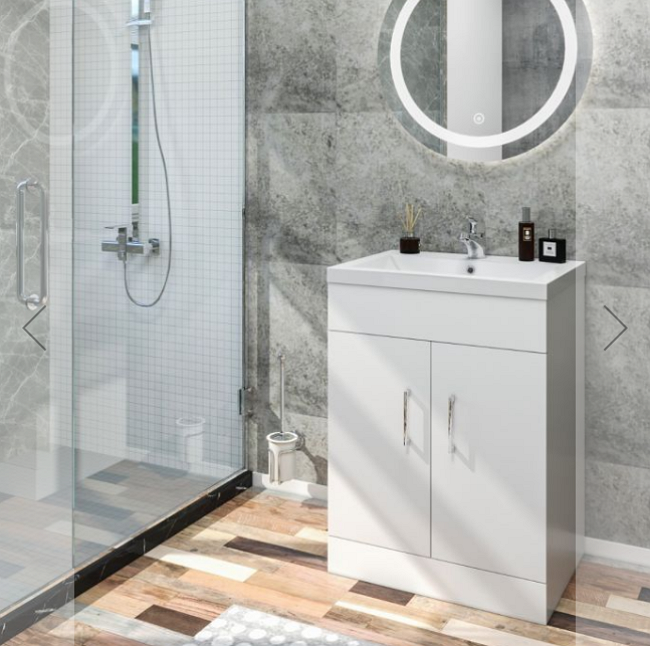
Choosing the perfect bathroom vanity unit isn't just about style and storage; it's a precise exercise in spatial planning. Selecting the wrong size can lead to a frustrating installation process, a cramped and impractical bathroom, or even a unit that simply won't fit through the door. In the UK, with our often compact bathroom spaces, understanding standard vanity unit sizes is the crucial first step to a successful renovation or update. This comprehensive guide will demystify single vanity unit sizes, double vanity unit dimensions, and how basin sizes interplay, providing you with the knowledge to confidently choose a unit that will physically fit and functionally excel in your home.
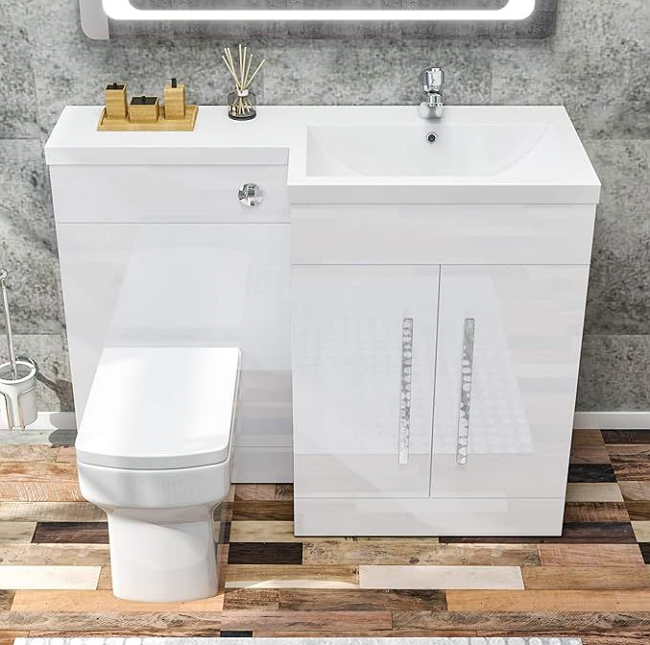
What are Bathroom Vanity Unit Dimensions and Key Terminology
Before diving into specific measurements, let's establish what we're measuring. A bathroom vanity unit's size is defined by three core dimensions, each vital for a good fit.
-
Width: The left-to-right measurement. This is the most critical dimension and the primary way vanities are categorised (e.g., a 600mm vanity unit).
-
Depth: The front-to-back measurement. This determines how much the unit protrudes into the room. Standard depths ensure comfortable use without bumping into walls or other fittings.
-
Height: The floor-to-countertop measurement. This affects ergonomics and comfort while washing hands or brushing teeth.
Two other key terms are essential. The countertop overhang—the lip that extends beyond the carcass—adds to the unit's overall footprint and must be accounted for. More importantly, the basin cut-out is the precise hole made in the countertop to house the basin. Its size and position are dictated by the basin you choose and must align with the unit's internal structure and plumbing. Always consider the location of your waste pipe and water inlets; a beautiful vanity is useless if it completely obscures your plumbing points.
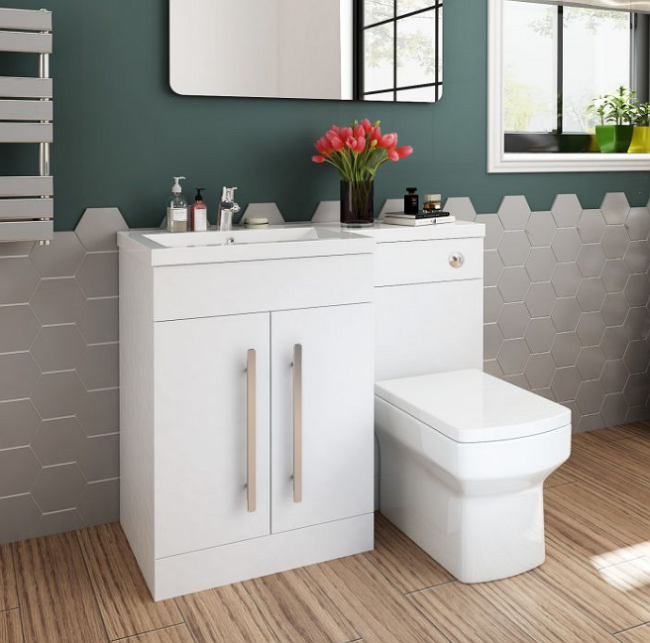
Comprehensive Guide to Standard UK Double Vanity Unit Sizes
A double vanity unit, with two basins set into a single counter, is the pinnacle of shared bathroom convenience, reducing morning queues and providing personal space. They require significant wall space but transform the functionality of a bathroom.
Compact Double Vanity Units (800mm, 900mm, 1000mm widths)
Yes, double vanities can fit in modest spaces. An 800mm double vanity is a tight fit, typically using two very small basins (approx. 400mm each) with minimal division. The 900mm to 1000mm sizes are more common for compact doubles, often featuring two semi-recessed or countertop basins. Storage underneath may be split into two smaller compartments.
Standard Double Vanity Unit Sizes (1000mm, 1200mm, 1400mm widths)
This range offers a comfortable and practical solution for most couples. The 1200mm double vanity is a hugely popular standard size, allowing for two 500-550mm basins with a central divider or tap space. The 1400mm vanity provides a more spacious feel, often with a full-width countertop and undermount basins. These units usually feature generous split-drawer or cupboard storage.
Large & Luxury Double Vanity Sizes (1500mm, 1600mm, 1800mm+ widths)
For spacious family bathrooms or luxury en-suites, these impressive units make a statement. They allow for large basins, significant gapes between them, and vast amounts of integrated storage. A 1500mm or 1600mm vanity can comfortably host two full-sized basins with a central unit of drawers. Depths remain around 500mm, but the height may increase to 900-950mm for a premium feel.
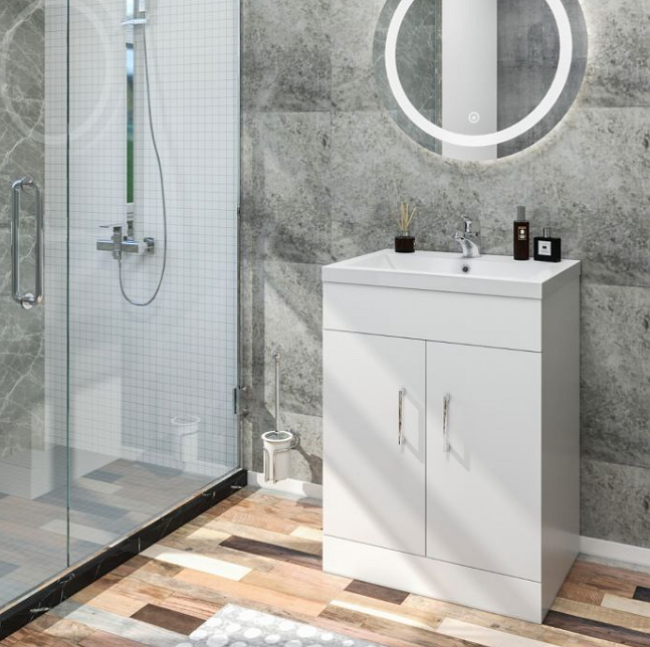
Standard UK Single Vanity Unit Sizes – The Compact Solution
The single vanity unit is the UK's workhorse, ideal for main bathrooms, en-suites, and essential in cloakrooms. They offer a streamlined look and efficient use of space.
Small/Compact Single Vanity Units (300mm, 400mm, 450mm width)
These are the space-saving heroes. A 300mm vanity unit is typically the absolute minimum, often housing a tiny corner basin. The 400mm and 450mm vanity units are classic cloakroom choices, providing just enough counter space for a small basin and soap. Depth is usually a standard 300-400mm, and they often come with a useful storage cupboard or open shelf.
Standard Single Vanity Units (500mm, 600mm, 700mm width)
This is the most popular and versatile range. The 600mm vanity unit is arguably the UK standard, offering an excellent balance of basin space and usable worktop area on either side. The 500mm size is a snug alternative for tighter spaces, while the 700mm vanity provides generous storage and a more substantial countertop presence. Standard depth here is typically 450-500mm, with heights ranging from 850-900mm.
Large Single Vanity Units (800mm, 900mm, 1000mm width)
For those who prioritise expansive counter space and ample storage, these units deliver. An 800mm or 900mm vanity unit can accommodate a large, statement basin while leaving plentiful room for toiletries. The 1000mm vanity offers a luxurious feel in a single-basin format. These often suit larger family bathrooms or where a double vanity won't fit.
Bathroom Basin Sizes and How They Relate to Vanity Units
The basin is the vanity's centrepiece, and its type and size directly dictate the required vanity unit dimensions.
Basin Types:
-
Countertop Basins: Sit entirely on top of the counter. The vanity unit width must be greater than the basin's diameter/length to create a ledge.
-
Undermount Basins: Fixed beneath the countertop. The vanity must be strong enough to support it, and the cut-out must be exact.
-
Semi-Recessed/Inset Basins: Partially sit within the countertop. They save a little depth compared to countertop bowls.
Standard UK Basin Sizes:
-
Small Basins (400mm-500mm): Common in cloakrooms and compact vanities.
-
Standard Basins (500mm-600mm): The typical choice for a 600mm or 700mm single vanity unit.
-
Large Basins (600mm-800mm+): Require a large single (800mm+) or become the centrepiece of a double vanity.
The Golden Rule: As a guideline, your vanity unit should be at least 100mm wider than your basin's total length. For a 500mm basin, a 600mm vanity is ideal. For a 600mm basin, look at 700mm or 750mm units. Always check the manufacturer's specific cut-out requirements for the model you choose.
How to Measure Your Bathroom for a Perfect Vanity Unit Fit
A tape measure and this checklist are your best friends.
-
Measure the Space: Record the exact width, depth, and height of the intended location. Measure in multiple places in case of uneven walls.
-
Consider Clearances: Allow for a minimum of 200-300mm between the vanity edge and any adjacent toilet, bath, or shower screen for comfortable access. Don't forget the door swing—will it clear the unit?
-
Plan the "Working Zone": Ensure there is adequate space to stand and use the vanity comfortably. Building regulations suggest a clear floor space in front.
-
Locate Your Plumbing: Find your waste pipe and tap inlets. Most vanity units are designed to accommodate standard UK pipework, but moving it can be costly. Choosing a unit that aligns with existing plumbing is the most cost-effective approach.
Conclusion: Finding Your Perfect Fit
Navigating bathroom vanity unit sizes need not be a puzzle. By understanding the standard UK dimensions for single and double units, respecting the relationship with your basin, and meticulously measuring your space, you can make an informed choice that blends beauty with perfect practicality. Let this guide be your blueprint: prioritise your available space, your storage needs, and your existing plumbing. With this knowledge, you’re ready to select a vanity unit that will not only fit flawlessly but will also elevate your bathroom for years to come.
Ready to Explore Your Perfect Vanity?
Putting these measurements into practice is the next step. For an extensive range of vanity units in all the standard UK sizes discussed—from compact 400mm cloakroom solutions to spacious 1500mm double basins—visit Elegant Showers. Explore our curated collection to find the ideal vanity that matches your dimensions, style, and storage requirements. Our website features detailed specifications, high-quality imagery, and expert advice to help you visualise the perfect fit for your bathroom project. Find your flawless fit today at https://www.elegantshowers.co.uk/.
FAQs: Your Bathroom Vanity Unit Sizes Questions Answered
What is the standard height of a bathroom vanity unit in the UK?
The standard UK vanity unit height ranges from 850mm to 900mm from the finished floor to the top of the counter. This suits the average adult. Wall-hung units can be fixed at a tailored height.
What is the smallest size for a vanity unit?
You can find compact vanity units as narrow as 300mm. These are designed for tiny cloakrooms, often incorporating a mini basin and perhaps a single shelf.
How much space do you need between vanity and toilet?
A minimum clearance of 200mm is practical, but 300mm is recommended for comfortable access, cleaning, and to meet general building regulation guidance on space.
Can you put a double vanity in a small bathroom?
It's challenging but possible with compact units. A 1000mm double vanity is the starting point. You must have sufficient uninterrupted wall space (over 1.2 metres) and ensure it doesn't overwhelm the room or block access.
What size vanity do I need for an 800mm basin?
For an 800mm countertop basin, you should look for a vanity unit at least 900mm, ideally 1000mm wide. For an undermount 800mm basin, the vanity could be 800mm, but a wider unit provides more usable counter space.
Are bathroom vanity units a standard depth?
Most are within the range of 450mm to 500mm. This aligns with standard basin depths and allows for meaningful under-sink storage. Always check the specification, as depths can vary by style.
Do I need planning permission for a new bathroom vanity?
No, installing a vanity unit does not require planning permission. However, you must ensure the work complies with Building Regulations, particularly Part P if adding new electrical elements (e.g., lit mirrors) near water, and Part H for drainage.






Validate your login