

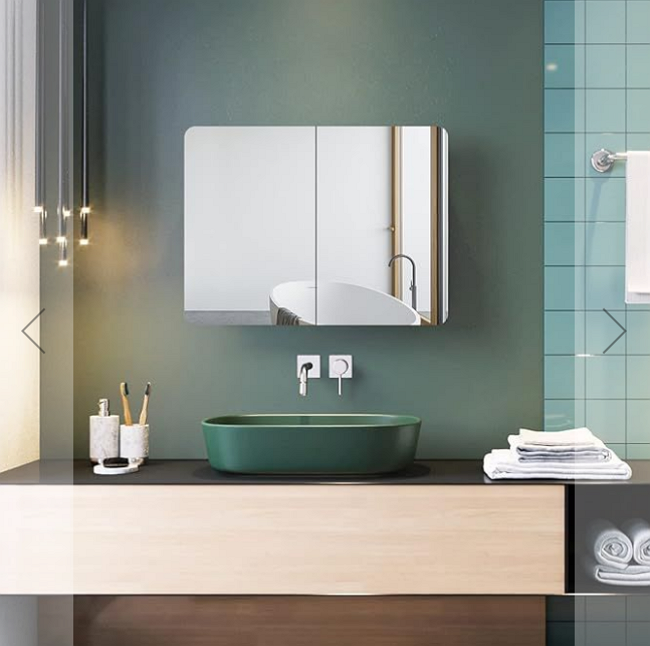
The UK bathroom has undergone a quiet revolution. Gone are the days when a simple reflective pane and a clunky, white‑painted cabinet sufficed. As we move through 2026, the bathroom is no longer just a functional space—it has become a personal sanctuary, a place for both efficient morning routines and restorative evening rituals. At the heart of this transformation lies one standout feature: the LED mirror cabinet.
Once considered a luxury add‑on reserved for high‑end hotels and bespoke renovations, illuminated cabinets have swiftly become a core design element in modern homes across the country. From compact flats in Central London to spacious family bathrooms in Slough, homeowners are discovering that an LED mirror cabinet offers the perfect trifecta of superior task lighting, spa‑like ambient glow, and energy‑efficient smart storage. This article explores why this trend has taken hold and why 2026 is the year to move beyond the basic mirror.
The Evolution – From Functional Storage to Focal Point
The Demise of the Basic Bathroom Mirror
For decades, the standard bathroom setup involved a simple mirror hung above a pedestal sink, paired with a separate, often utilitarian wall cabinet. These solutions created visual clutter, limited storage, and offered little in the way of lighting enhancement. The result was a room that felt purely functional, with harsh shadows cast on the face during grooming and no sense of atmosphere.
Today’s homeowners—particularly those undertaking bathroom renovation 2026 projects—seek a minimalist, uncluttered aesthetic. They want clean lines, hidden storage, and a unified design language. The separate mirror and cabinet simply no longer meet these expectations.
The Rise of the Integrated LED Mirror Cabinet
Enter the integrated LED mirror. This product seamlessly fuses a high‑quality reflective surface with a storage cabinet and advanced lighting system. Leading manufacturers, such as Roper Rhodes, Schneider Electric, and KEUCO, have elevated these units to true design pieces. For instance, the Schneider LUNE curved illuminated mirror cabinet won the Red Dot Design Award for its elegant, organic shape—a clear sign that these are now considered centrepiece items rather than simple utilities.
By combining all three functions into one sleek unit, these cabinets free up valuable counter space, reduce visual noise, and become the undisputed focal point of the room.
Catering to UK Homes (Space and Style)
Space is a premium in many UK homes, especially in urban areas. LED mirror cabinets excel at maximising storage without sacrificing style. They come in various configurations to suit different wall structures and room sizes:
-
Wall‑mounted (surface) cabinets – ideal for easy installation on solid walls.
-
Recessed cabinets – designed to sit flush within the wall, perfect for creating a seamless, built‑in look in stud‑partition walls.
-
Semi‑recessed options – a compromise that offers depth without requiring full recessing.
This flexibility ensures that whether you are renovating a Victorian terrace or a new‑build apartment, there is a solution that fits both the space and the desired aesthetic.
The Top 2026 Design Trends for LED Mirror Cabinets
As the market matures, several distinct design trends have emerged, reflecting broader shifts in interior design.
Ultra‑Slim and Minimalist Profiles
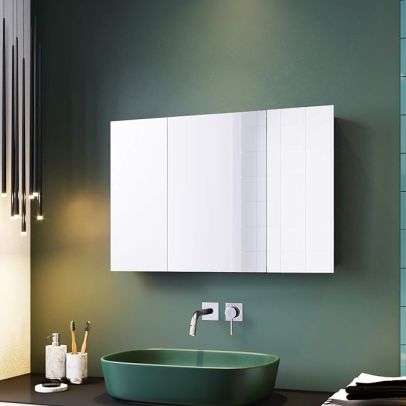
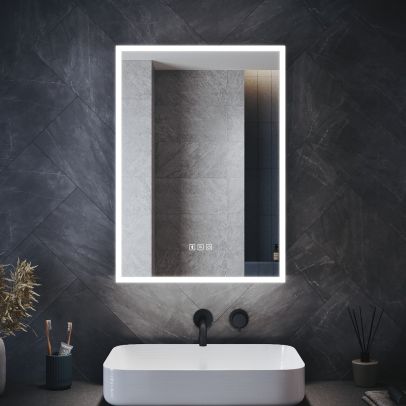
Minimalism remains dominant. Ultra‑thin cabinets with frameless mirrors and slim‑line aluminium edges create a sleek, barely‑there profile. They sit close to the wall, emphasising clean lines and allowing the surrounding tiles or wall colour to take centre stage.
Organic and Curved Shapes
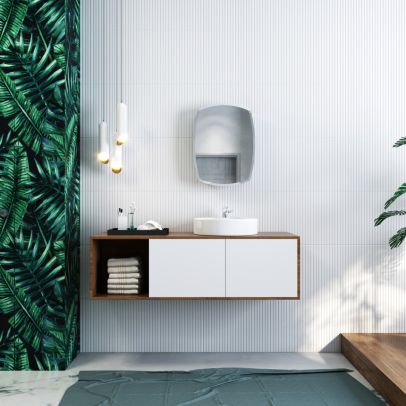
While rectangles and squares still have their place, 2026 has seen a surge in curved mirror designs. Arched, oval, and rounded mirrors soften the hard lines often found in bathrooms, adding a touch of boutique‑hotel elegance. The aforementioned Schneider LUNE is a prime example of how curves can make a statement while maintaining functionality.
Smart Technology Integration
Today’s smart mirror goes far beyond simple illumination. Key features that UK homeowners now expect include:
-
Anti‑fog demisters – a near‑essential feature in the damp British climate, ensuring a clear reflection immediately after a shower.
-
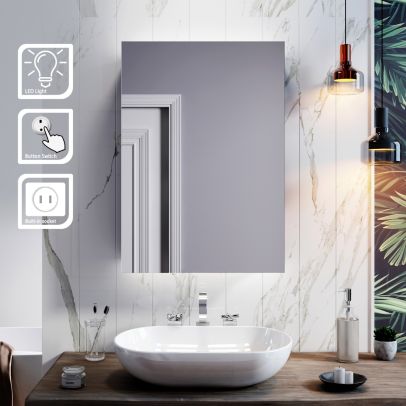
Touch sensors and motion activation – capacitive controls allow users to dim the lights, change colour temperature, and switch the demister on or off with a single touch. Some models even offer touchless operation for enhanced hygiene.
-
Integrated shaver sockets – discreetly placed UK 3‑pin sockets within the cabinet eliminate the need for a separate shaver point.
-
Bluetooth speakers – for those who enjoy music or podcasts during their morning routine.
Mixed Finishes and Statement Styling
While silver and white remain popular, manufacturers are increasingly offering mixed metal finishes such as matte black, brushed bronze, and anodised aluminium. These allow the mirror cabinet to coordinate with other bathroom hardware—taps, shower frames, towel rails—creating a cohesive, curated look.
The Practical & Energy-Efficient Choice for UK Homes
Energy Efficiency as a Top Priority
For UK households in 2026, energy efficiency is no longer a “nice‑to‑have”—it is a primary purchasing driver. With energy costs remaining a significant concern and the government’s push toward net‑zero homes, consumers are actively seeking products that reduce electricity consumption without compromising on performance. According to recent consumer trend data, searches for “energy‑saving lighting” and “low‑running‑cost bathroom” have increased by over 40% year on year, reflecting a nationwide shift toward sustainable home improvements.
LED mirror cabinets are ideally positioned to meet this demand. At the heart of every unit is LED technology, which is up to 80% more efficient than traditional halogen or incandescent bulbs. To put that into perspective, a typical LED‑integrated bathroom cabinet uses between 12 and 24 watts of power—roughly equivalent to a single energy‑saving light bulb. In comparison, a standard bathroom with separate mirror lights and a cabinet might rely on two 50‑watt halogen bulbs, consuming over 100 watts each time they are used.
Over the course of a year, the difference is stark. Assuming average daily use of two hours, a traditional setup could add £15–£20 to a household’s electricity bill, whereas an LED cabinet contributes just £3–£5 annually. For homeowners who use their bathroom lighting more frequently—especially during the darker UK winters—the savings multiply. When combined with other energy‑efficient choices (such as low‑flow showerheads or smart heating controls), an illuminated cabinet becomes a meaningful part of a home’s overall energy reduction strategy.
Beyond cost savings, the environmental impact is equally compelling. LEDs contain no mercury, produce less waste because they last for decades, and significantly lower a home’s carbon footprint. As such, they align perfectly with the growing consumer desire for an eco‑friendly bathroom—a trend that is particularly strong among younger renovators and those in eco‑conscious regions.
Safety and Durability (IP Ratings)
Integrating electricity and water requires meticulous safety standards, and this is where IP ratings (Ingress Protection) become critical. Every LED mirror cabinet sold in the UK for bathroom use must carry an IP rating that matches its intended location. The most common rating for these units is IP44, which signifies “splashproof” protection. An IP44‑rated cabinet can withstand water splashes from any direction, making it suitable for installation in Zone 2 of a bathroom—the area extending 60cm from the edge of a bath or shower, as well as the area around a sink.
For installations directly above a shower or bath (Zone 1), a higher rating of IP65 or above is required. Many premium manufacturers now offer models with IP65‑rated fronts or fully sealed units, providing additional peace of mind. Homeowners should always verify the IP rating of their chosen cabinet and confirm with their Part P electrician that the installation complies with the latest UK bathroom regulations (BS 7671). Using a non‑compliant product or installing it incorrectly can invalidate home insurance and pose serious safety risks.
Durability is another key advantage. The best LED mirror cabinets are constructed from materials designed to withstand the humid, often steamy environment of a UK bathroom. Look for:
-
Anodised aluminium frames – resistant to corrosion and tarnishing.
-
Lacquered or sealed glass edges – preventing moisture ingress behind the mirror.
-
Stainless steel hinges – ensuring smooth operation without rust over years of use.
These robust components, combined with the inherent longevity of LEDs (which are solid‑state and have no filaments to break), mean that a well‑chosen cabinet will outlast multiple conventional mirror and light replacements.
The Long‑Term Investment
While the upfront cost of a quality illuminated mirror cabinet is higher than that of a basic mirror plus a separate storage unit, the total cost of ownership tells a different story. First, there are no ongoing bulb‑replacement costs. Traditional bathroom lighting often requires new bulbs every one to two years; over a decade, those costs—and the inconvenience of sourcing and fitting them—add up. With an integrated LED system rated for 30,000–50,000 hours, the average household will never need to change a bulb.
Second, the product is backed by robust warranties that reflect its quality. Leading UK brands such as Roper Rhodes offer a 5‑year guarantee on many of their illuminated cabinets. Others, like Pebble Grey, provide a 10‑year guarantee when the product is registered after purchase. These guarantees not only cover manufacturing defects but also signal the manufacturer’s confidence in the product’s longevity. For comparison, a basic mirror typically carries no warranty beyond delivery, and a standalone bathroom cabinet often has only a one‑ or two‑year guarantee.
Finally, there is the impact on property value. In 2026, estate agents increasingly note that a well‑designed bathroom with modern, energy‑efficient features is a strong selling point. A premium LED mirror cabinet—especially one with smart features like demisters, dimmable colour temperature, and integrated shaver sockets—demonstrates that the homeowner has invested in quality and future‑proofing. For anyone planning to sell within the next five to ten years, this investment can yield a tangible return.
In short, the low running costs, minimal maintenance, and long‑term durability make the LED mirror cabinet one of the most financially sound choices in a bathroom renovation. It is an upgrade that pays for itself over time while delivering daily convenience and peace of mind.
Installation and Integration – What UK Homeowners Need to Know
A beautifully chosen LED mirror cabinet will only deliver on its promise if it is installed correctly. Unlike a standard mirror that can be hung with simple brackets, illuminated cabinets require careful planning, professional electrical work, and consideration of the surrounding bathroom environment. Getting these details right ensures safety, longevity, and a seamless finish that enhances the overall design.
Professional Installation is Essential
In the UK, any electrical installation in a bathroom must comply with Part P of the Building Regulations. This means that installing a hardwired LED mirror cabinet is not a DIY task—it must be carried out by a qualified electrician who is registered with a competent person scheme such as NICEIC, NAPIT, or ELECSA. The electrician will:
-
Ensure the circuit is appropriately rated and protected (usually via a fused spur or a dedicated lighting circuit).
-
Install the unit in compliance with BS 7671 (IET Wiring Regulations), including correct zoning and IP rating requirements.
-
Provide a minor works certificate or installation certificate, which is essential for future property sales and insurance purposes.
Homeowners should never attempt to connect an LED mirror cabinet to a standard plug socket using a trailing lead, as this is both unsafe and non‑compliant for a bathroom environment. If a unit is supplied with a pre‑fitted flex, it must still be connected to a suitable fused connection unit (FCU) by an electrician.
Planning and Placement – Before You Buy
The ideal position for an LED mirror cabinet balances ergonomics, lighting effect, and practicality. Consider these factors before making a purchase:
-
Height: The centre of the mirror should typically be at eye level for the primary users—around 150–160cm from the floor. If the cabinet will be used by children or multiple adults of different heights, adjustable mounting or a mid‑height placement can be considered.
-
Clearance: Ensure there is adequate clearance from the sink, taps, and any adjacent shower enclosures. A minimum of 150–200mm between the bottom of the cabinet and the tap is recommended to avoid splashing and allow comfortable use of the sink.
-
Wall Type: Solid walls (brick, block) are straightforward for surface‑mounted cabinets. For recessed installations, a stud‑partition wall with sufficient cavity depth is required. If the wall is solid and you desire a flush finish, a false wall or built‑out timber frame may be needed.
-
Electrical Supply: The electrician will need to run a supply from the nearest lighting circuit or a dedicated spur. Plan for the cable entry point—many cabinets have a hidden cable entry channel or a specific entry zone. It is often easiest to install the cabinet first (mechanically) and then have the electrician connect the supply through the designated access.
Installation Types: Surface‑Mounted vs. Recessed
Choosing the right installation method significantly impacts the final look and the complexity of the project.
-
Surface‑Mounted: The cabinet is fixed directly onto the finished wall. This is the simplest, most cost‑effective option, suitable for solid walls and for homeowners who prefer a straightforward installation. Modern surface‑mounted cabinets have slim profiles (often under 100mm depth) that minimise protrusion while offering generous storage. They can be installed after tiling is complete, making them a popular choice for renovations.
-
Recessed: The cabinet is set into the wall, so the front face sits flush with the wall surface. This creates a sleek, built‑in appearance and maximises space in small bathrooms. Recessed installation requires:
-
A stud‑partition wall or a false wall with a cavity deep enough to accommodate the cabinet’s depth (typically 90–120mm).
-
Careful coordination with the tiler and electrician, as the opening must be framed before tiling, and the cabinet is often fitted as tiling progresses.
-
Access for wiring, usually from the side or rear of the recess.
-
-
Semi‑Recessed: A hybrid option where the cabinet sits partially into the wall, but part of it remains surface‑mounted. This is sometimes used in situations where full recessing is not possible but a reduced protrusion is desired.
Integration with Other Bathroom Elements
An LED mirror cabinet does not exist in isolation; its success depends on how it integrates with the rest of the bathroom’s design and infrastructure.
-
Tiling and Finishing: For surface‑mounted units, ensure the tiling or wall finish extends to the full perimeter of the cabinet’s backplate. Many cabinets come with a slim mounting frame that sits against the finished wall, creating a clean transition. For recessed units, the tiling should be cut neatly around the cabinet’s frame, with a silicone seal applied to prevent moisture ingress behind the tiles.
-
Lighting Coordination: The cabinet’s lighting should complement, not compete with, other light sources. If you have recessed ceiling downlights, position them so they do not cast shadows on the cabinet. Some homeowners choose to install a dedicated ceiling light directly above the cabinet to enhance task lighting, but this must be coordinated with the cabinet’s own illumination to avoid glare.
-
Socket and Switch Placement: If the cabinet includes an integrated shaver socket, ensure that the cabinet’s location does not conflict with existing wall sockets. The electrician may need to reroute or isolate nearby circuits to maintain compliance with zoning rules. It is also important to position the cabinet so that its internal socket is easily accessible when the door is open.
-
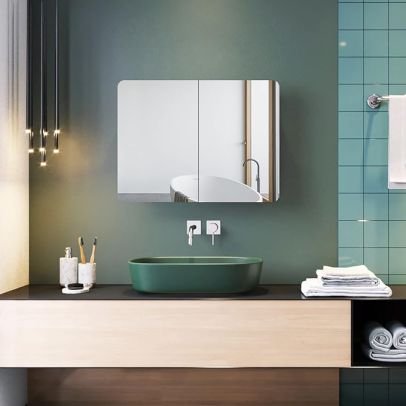
Mirror Alignment with Vanity Unit: For a cohesive look, align the width of the cabinet with the vanity unit or basin below. Ideally, the cabinet should be centred over the sink, and its width should not exceed the vanity width by more than a few centimetres, unless the design intentionally uses asymmetry for effect.
Frequently Asked Questions about Illuminated Bathroom Mirror Cabinet
Are LED mirror cabinets worth it?
Yes. They combine high‑quality task and ambient lighting, smart storage, and modern design into one unit. For most homeowners, the convenience, energy savings, and aesthetic upgrade represent excellent value and can even enhance property value.
How long do LED mirrors last?
The LED components typically last between 30,000 and 50,000 hours. With average daily use of around 3–5 hours, this equates to 15–20 years of reliable service—far longer than traditional light bulbs.
Do you need a special electrician to fit an LED mirror cabinet?
You need a qualified electrician who is registered with a competent person scheme (such as NICEIC or NAPIT) and is familiar with bathroom electrical regulations. They will ensure the unit is correctly hardwired and that the IP rating is appropriate for the installation zone.
What is an IP44 rating?
IP44 means the product is protected against solid objects larger than 1mm (like wires or small tools) and is splash‑proof from all directions. It is the minimum recommended rating for electrical items installed in bathroom Zones 2 and outside zones.
Can I dim the lights on an LED mirror cabinet?
Absolutely. Many modern cabinets feature infinitely dimmable LEDs controlled by touch sensors or remote controls. This allows you to adjust the brightness from a bright, functional level to a soft, ambient glow for evening relaxation.
What colour light is best for a bathroom mirror?
Ideally, choose a model with adjustable colour temperature. Use cool white (4000K–6500K) for precise grooming tasks like makeup application or shaving, and switch to warm white (2700K–3000K) for a calming, spa‑like atmosphere during baths or late‑night visits.
Conclusion
The journey from the basic bathroom mirror to the intelligent, design‑led LED mirror cabinet reflects a broader shift in how we view our homes. No longer just a place for utility, the bathroom is now a sanctuary where design, technology, and wellbeing intersect. As we move through 2026, these illuminated cabinets have cemented their status not as a luxury add‑on but as an essential core feature—delivering flawless task lighting, serene ambient glow, energy‑efficient operation, and clever storage in one streamlined package.
For anyone planning a bathroom update, whether a full renovation or a simple refresh, investing in a high‑quality illuminated mirror cabinet is a decision that pays dividends in daily comfort, energy savings, and long‑term home value. The key is to choose a unit that suits your space, style, and technical requirements—and to have it installed by a qualified professional.
If you are ready to explore the possibilities, visit Elegant Showers for an extensive collection of LED mirror cabinets, from ultra‑slim surface‑mounted designs to fully recessed smart mirrors.


Validate your login