

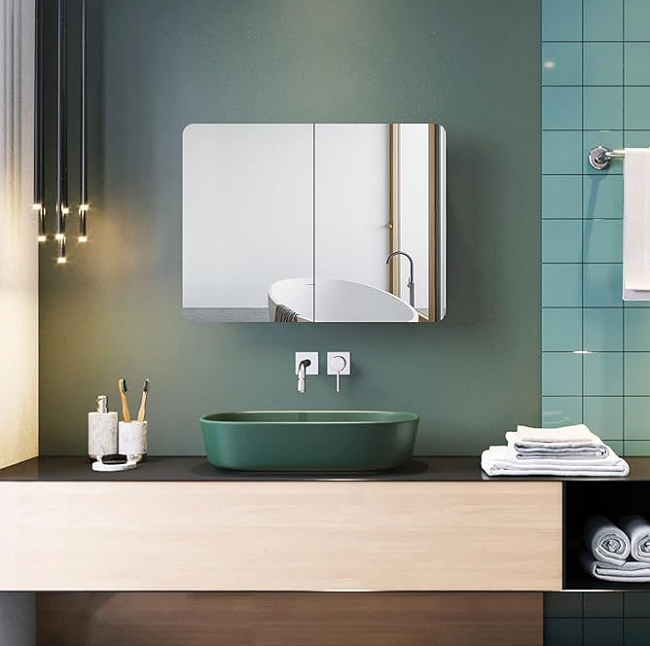
In countless UK homes, from Victorian terraces to modern city flats, the bathroom remains the smallest room in the house. Storage quickly becomes a premium, and cluttered countertops make the space feel even tighter. A well-chosen space-saving bathroom mirror cabinet solves two problems at once: it provides hidden storage for toiletries and medicines while adding a reflective surface that visually doubles the room. This article explores five smart designs – wall-mounted units, corner cabinets, recessed and sliding door models – and explains how to use mirrors to make a small bathroom feel larger, based on the most trusted UK search results.
5 Space-Saving Bathroom Mirror Cabinet Ideas for Small UK Bathrooms
Wall-Mounted Bathroom Mirror Cabinet – The Classic Space-Saving Bathroom Mirror Cabinet
Why Wall-Mounted Bathroom Mirror Cabinets Are Ideal for Small Bathrooms
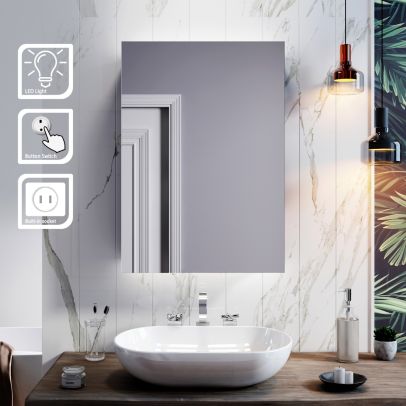
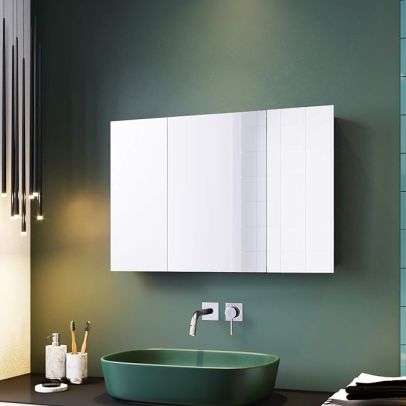
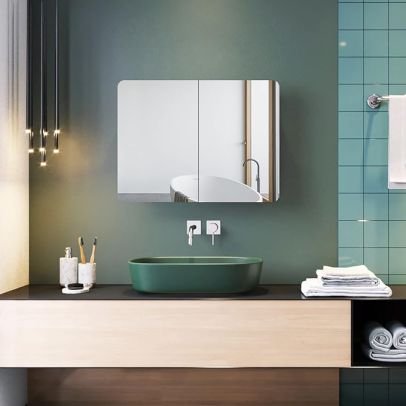
The most popular choice across the UK, the wall-mounted bathroom mirror cabinet attaches directly to the wall above your basin or toilet. Unlike freestanding units, it occupies zero floor space while offering generous internal shelves. For bathrooms under two metres square, this space-saving bathroom mirror cabinet type keeps toothbrushes, cosmetics, and medications tidy without intruding on movement.
Key Features to Look For (Adjustable Shelves, Illuminated Versions, Soft-Close)
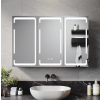
When selecting a wall-mounted bathroom mirror cabinet, prioritise adjustable shelves – they allow you to store tall bottles alongside flat packs of razor blades. Illuminated mirror cabinets with integrated LED strips solve two issues: poor bathroom lighting and morning shadows on your face. A soft-close mechanism prevents door slamming, especially important in small UK bathrooms where every inch is close to the wall.
Best Placement for Wall-Mounted Mirror Cabinets (Above Basin, Over Toilet)
For a standard layout, position the bathroom mirror cabinet centred over the sink, with the bottom edge 15–20cm above the tap. In a cloakroom or small ensuite, consider placing a slim bathroom cabinet above the toilet – this uses “dead” wall space and keeps the basin area uncluttered.
Corner Bathroom Mirror Cabinet – Turning Dead Space into Useful Storage
Why Corner Bathroom Mirror Cabinets Are a Game-Changer for Awkward Layouts
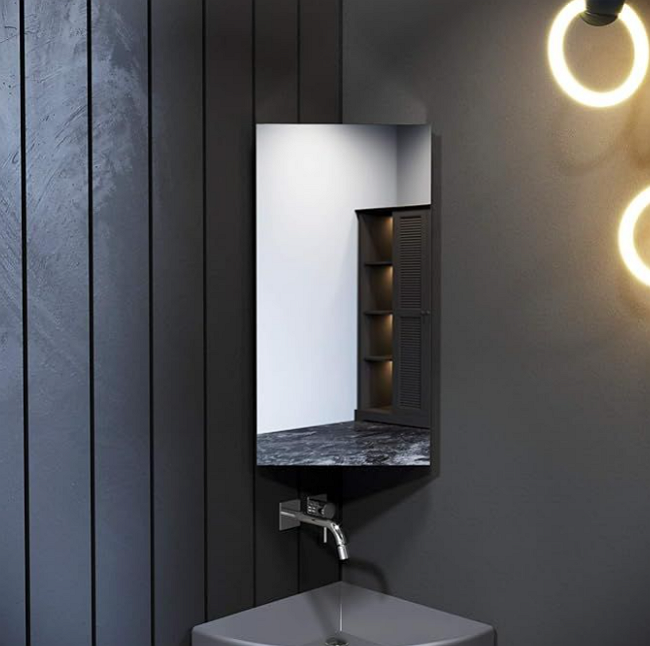
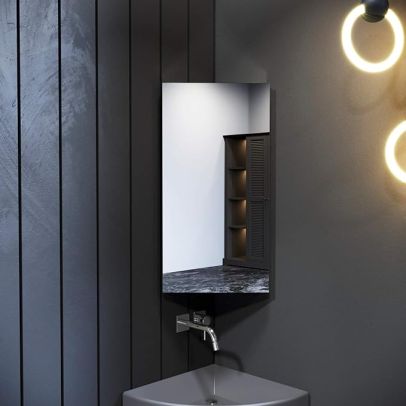
Many small UK bathrooms suffer from an unused corner – often next to a shower enclosure or behind the door. A corner bathroom mirror cabinet transforms that triangle into valuable storage. These space-saving bathroom mirror cabinets typically use a pentagon or curved front face to maximise internal volume while keeping a low profile.
Types of Corner Mirror Cabinets (Single Door, Double Door, Frameless, Stainless Steel)
You’ll find single-door corner bathroom mirror cabinets for tight spots (as narrow as 25cm per side) and double-door models that open like a book. Frameless designs blend seamlessly with tiled walls, while stainless steel corner cabinets resist humidity and are easier to clean.
How to Install and Style a Corner Bathroom Mirror Cabinet
Installation requires a corner bracket or a wall-mounting plate. Always use a spirit level – a crooked corner bathroom mirror cabinet will throw off the room’s geometry. Style by keeping the cabinet colour close to your wall tiles (e.g., white or silver) so it recedes visually, making the small bathroom feel more open.
Recessed Bathroom Mirror Cabinet – The Flush-Fit Space-Saving Solution
What Is a Recessed Bathroom Mirror Cabinet? (Wall Cavity Installation Overview)
A recessed bathroom mirror cabinet is installed directly into the wall cavity, so its face sits flush with the tiles or plaster. This is the ultimate space-saving bathroom mirror cabinet because it adds storage without protruding into the room at all – ideal for corridors or tiny ensuites where every centimetre matters.
Why Recessed Mirror Cabinets Are the Ultimate Space-Saving Bathroom Mirror Cabinet
Because only the door occupies room depth (often just 2–3cm), you can fit a recessed bathroom mirror cabinet even behind a swinging bathroom door. Internal depth typically ranges from 8–12cm, enough for standard bottles and jars. For UK flats with stud walls, you may need to reinforce the cavity – a job for a competent DIYer or a bathroom fitter.
Recessed vs. Surface-Mounted: Which Space-Saving Bathroom Mirror Cabinet Wins?
A surface-mounted mirror cabinet (like the wall-mounted units above) is easier to install and move. But a recessed model wins for pure space efficiency and a sleek, built-in look. However, if you rent your property, surface-mounted is the practical choice.
Smart Recessed Cabinet Features (LED Lighting, Shaver Socket, Demister Pad, USB Port)
Modern recessed bathroom mirror cabinets can include LED bathroom mirror cabinet lighting with touch sensors, a shaver socket (compliant with UK bathroom zones), a demister pad to keep the mirror clear post-shower, and even a USB port for charging electric toothbrushes.
Sliding Door Bathroom Mirror Cabinet – Ideal for Tight Bathroom Layouts
Why Sliding Door Bathroom Mirror Cabinets Save More Space Than Swing-Out Doors
In a compact bathroom, a hinged cabinet door can block access to the toilet or shower. A sliding door bathroom mirror cabinet eliminates this problem – the door glides horizontally on a track, requiring zero clearance. This makes it the perfect space-saving bathroom mirror cabinet for narrow rooms or for positioning close to a doorway.
Top Sliding Door Mirror Cabinet Features (Stainless Steel Construction, Pre-Assembled, Right/Left Opening)
Look for stainless steel bathroom cabinet tracks that won’t rust in high humidity. Many sliding door mirror cabinets come pre-assembled and offer the option to mount the door for right‑ or left‑hand opening – useful if you’re fitting next to a wall. Adjustable shelves are again valuable, and some models include a lock if you need to store medications.
Where to Fit Sliding Door Mirror Cabinets in Compact Bathrooms
The best location is above a small bathroom basin where a hinged door would hit a side wall. Alternatively, use a sliding door bathroom mirror cabinet above a corner toilet, where the door can slide towards the cistern.
Multi-Function Bathroom Mirror Cabinet – Lighting, Demisting & Storage in One
The Rise of Multi-Function Space-Saving Bathroom Mirror Cabinets in UK Homes
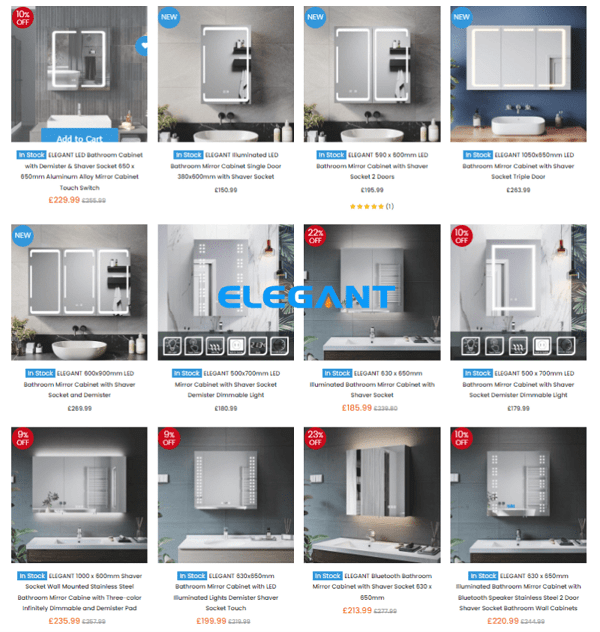
Modern small UK bathrooms benefit from multi-function units that combine mirror, storage, lighting, and electrical accessories into a single space-saving bathroom mirror cabinet. Instead of fitting a separate wall light and a demister, you buy one unit that does everything – ideal when wall space is limited.
Benefits of LED Bathroom Mirror Cabinets in Small Bathrooms
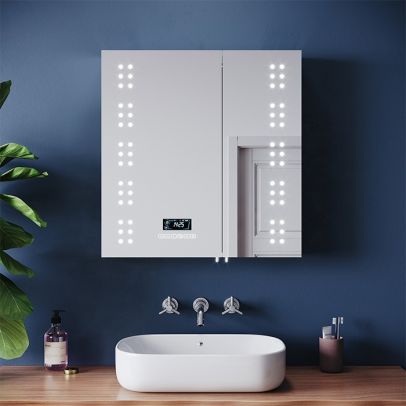
LED bathroom mirror cabinets provide bright, energy‑efficient illumination that casts even light across your face – essential for shaving or makeup. Unlike a single overhead bulb, LED strips around the mirror frame eliminate shadows. Many also have a colour temperature switch (cool white to warm white) to match your bathroom’s ambience.
Demister Pads and Shaver Sockets – Smart Features Worth Paying For
A demister pad (a thin heating element behind the glass) activates when you turn on the light, keeping the mirror surface clear even after a hot shower. A shaver socket built into the cabinet door saves you from installing a separate one on the wall – and ensures it’s within bathroom zones 2 or 3 as per UK regulations. Both features add £20–£50 to the price but transform usability.
Using Mirrors to Make a Small Bathroom Look Bigger – Tricks from UK Design Experts
Strategic Mirror Placement for a Larger Bathroom Illusion
Placing a bathroom mirror cabinet opposite a window or a light-coloured wall reflects natural light deep into the room. According to ABC Home and Alchymi Bathrooms, the best position is on the longest wall, perpendicular to the light source. If you cannot fit a large wall-mounted mirror cabinet, two smaller mirrored cabinets spaced apart can create a trompe-l’œil effect.
How a Space-Saving Bathroom Mirror Cabinet Reflects Light and Expands the Room
A mirrored bathroom cabinet with a high-quality, distortion-free reflection acts as a second window. When you open the cabinet door, the interior shelf edges should be painted white or light grey – dark shelf edges absorb light and break the illusion. Also, choose frameless mirror cabinets; frames add visual clutter and shrink the perceived room size.
Mirror Size and Shape – What Works Best in a Small UK Bathroom
A single large bathroom mirror can feel overwhelming. Instead, use a space-saving bathroom mirror cabinet that covers 60–70% of the wall above the basin. Horizontal rectangles (e.g., 70cm wide, 50cm high) make the room feel wider; vertical rectangles (50cm wide, 70cm high) draw the eye upward, making the ceiling feel higher. For corner mirror cabinets, a curved front softens the room’s geometry.
Mirrors vs. Mirrored Bathroom Mirror Cabinets – Which Is Better for Space?
A plain mirror gives you more reflective surface area but zero storage. A mirrored bathroom cabinet sacrifices 10–15% of reflection depth (due to the cabinet’s frame and door edges) but adds practical storage. In a small bathroom where counter space is non‑existent, the mirror cabinet wins every time. If possible, combine a recessed bathroom mirror cabinet with an additional fixed mirror on an adjacent wall – maximum storage plus maximum reflection.
Frequently Asked Questions (FAQs) About Space-Saving Bathroom Mirror Cabinets
What size bathroom mirror cabinet should I buy for a small bathroom?
For a typical small UK bathroom (under 4m²), choose a slim bathroom cabinet between 50–70cm wide and 60–80cm high. Depth should be under 15cm for surface‑mounted or 8–12cm for recessed bathroom mirror cabinets. If you have a cloakroom or ensuite as small as 2m², consider a narrow bathroom cabinet of 30–40cm width, which can be mounted above a corner basin or next to a shower. Always measure the available wall space, including the swing area for hinged doors. For sliding door mirror cabinets, you can go slightly wider (up to 80cm) because no clearance is required.
Can I install a bathroom mirror cabinet without drilling holes?
Yes – some wall-mounted bathroom mirror cabinets use heavy‑duty adhesive strips (like Command™ Bathroom Strips) or suction cups, but these are only for very light units (under 3kg) and not recommended for glass‑fronted cabinets filled with toiletries. For safety, most UK installers recommend drilling into wall plugs, especially for mirror cabinets with glass doors. If you are renting, speak to your landlord first – many allow professional installation with small wall plugs that can be filled later. Alternatively, consider a freestanding mirror cabinet on a narrow stand, though this uses floor space.
Are sliding door bathroom mirror cabinets better than hinged ones?
In extremely tight layouts (e.g., where a hinged door would hit a toilet or shower screen), sliding door bathroom mirror cabinets are better because they require zero swing clearance. However, hinged doors offer easier access to the full cabinet interior, allowing you to see and reach items on both sides without sliding a door past your face. Sliding tracks can also collect dust and limescale, requiring occasional cleaning with a small brush. For most small UK bathrooms, a hinged door with soft‑close is preferred unless space is critically tight.
What’s the difference between a recessed and a surface-mounted bathroom mirror cabinet?
A recessed bathroom mirror cabinet sits inside the wall cavity, protruding only 2–3cm from the finished wall surface. This is the ultimate space-saving bathroom mirror cabinet for tiny rooms, but it requires cutting into plasterboard or brick – a messy job best left to a professional. A surface-mounted unit (like most wall-mounted bathroom mirror cabinets) projects 12–15cm into the room and attaches directly to the wall surface. Recessed saves more space but is difficult to install in solid brick walls common in older UK homes; surface‑mounted is easier and renter‑friendly.
How do mirror cabinets with adjustable shelves help small bathroom storage?
Adjustable shelves let you reconfigure the interior to fit tall shampoo bottles, short jars, or flat boxes of cotton pads. Without them, you waste vertical space – for example, a fixed shelf might be too low for a 25cm mouthwash bottle, forcing you to store it elsewhere. Most space-saving bathroom mirror cabinets under £100 include at least two adjustable shelves, usually supported by plastic clips that slot into pre‑drilled holes. For maximum flexibility, look for cabinets with five or more height positions.
Are stainless steel bathroom mirror cabinets better than MDF or plastic?
Yes – stainless steel bathroom mirror cabinets are far more resistant to humidity, rust, and warping compared to MDF (medium‑density fibreboard) or ABS plastic. MDF can swell within two years in a poorly ventilated small UK bathroom, especially near a shower. Stainless steel is also easier to clean and looks more modern. The downside: stainless steel cabinets typically cost 30–50% more than MDF equivalents. For a budget compromise, look for MDF cabinets with a full water‑resistant lacquer and rust‑proof hinges.
Conclusion – Choose the Right Space-Saving Bathroom Mirror Cabinet for Your UK Home
How to choose the best bathroom mirror cabinet for your UK home? From wall-mounted units to recessed and sliding door designs, there is a space-saving bathroom mirror cabinet for every small UK bathroom. Prioritise your layout’s constraints: corners call for corner mirror cabinets, rented flats suit surface-mounted models, and frequent fogging demands a demister pad. Measure twice, install carefully, and enjoy a clutter‑free bathroom that looks twice its size. For even more bathroom mirror cabinet ideas and solutions, including the latest illuminated and anti‑fog models, visit Elegant Showers – a trusted UK supplier with a wide range of space‑saving designs tailored to compact bathrooms.

Validate your login