

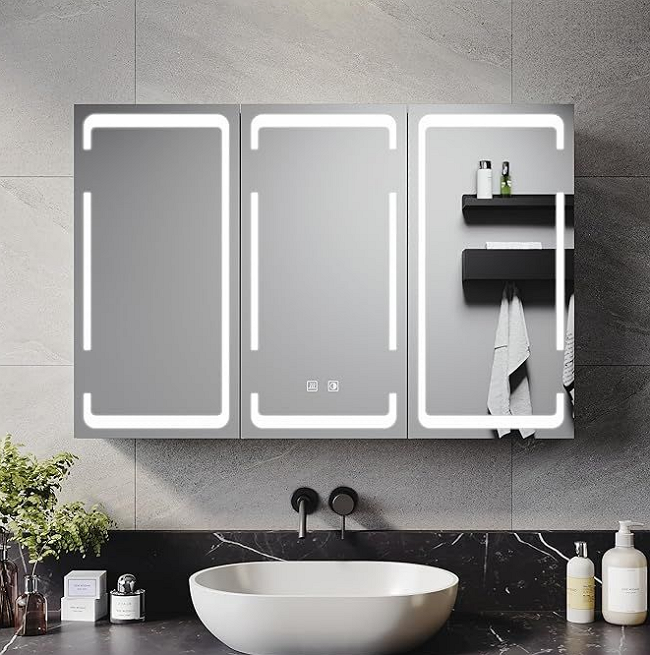
Looking for a way to declutter your bathroom without sacrificing style? A bathroom mirror cabinet might be the single most transformative addition you can make. Unlike a simple flat mirror, a mirrored bathroom cabinet offers dual functionality: a clear reflection for grooming plus hidden storage for toiletries, medicines, and cosmetics.
But with dozens of options on the UK market – from budget-friendly finds to premium illuminated cabinets – how do you choose the perfect one? This complete buying guide will walk you through measuring your space, matching the cabinet to your bathroom’s style, separating must-have features from nice-to-haves, and identifying moisture-resistant materials (like picking stainless steel or aluminium over standard MDF). By the end, you’ll know exactly which bathroom mirror cabinet suits your home, budget, and daily routine.
Why You Need a Bathroom Mirror Cabinet
A bathroom mirror cabinet is far more than a simple reflective surface. It solves two of the most persistent problems in UK bathrooms: a chronic lack of storage and poor task lighting. First, consider what a standard flat mirror does – it shows you your reflection and nothing else. A bathroom cabinet with mirror, on the other hand, transforms that wasted wall space into a hidden storage zone. Behind the mirrored door, you can neatly organise toothbrushes, razors, prescription medicines, cosmetics, and cleaning sprays – all kept completely out of sight.
For small bathrooms, ensuites, and cloakrooms – which are increasingly common in modern UK homes – a wall mounted mirror cabinet is a game-changer. It frees up valuable counter space that would otherwise be cluttered with bottles and jars. Instead of knocking over your partner’s moisturiser every morning, you simply open the cabinet, grab what you need, and close it. The room instantly looks larger, cleaner, and more serene.
Second, many modern illuminated mirror cabinets provide shadow-free, energy-efficient LED lighting at exactly face height. This is a major upgrade compared to a single overhead ceiling light, which casts unflattering shadows under your chin. Whether you’re shaving, applying makeup, or plucking eyebrows, an LED bathroom mirror cabinet gives you even, natural-looking illumination.
Third, unlike open shelving or a freestanding bathroom unit, a mirrored cabinet keeps items dust-free, dry, and away from steam. No more rusty razor blades or damp toothbrush handles. And because the cabinet is mounted at eye level, everything is within easy reach – you never have to bend down to a low drawer again.
Whether you’re renovating a family bathroom, updating a guest cloakroom, or simply tired of a cluttered sink, the right bathroom medicine cabinet makes your daily routine faster, more organised, and surprisingly more enjoyable. It’s a small change that delivers outsize benefits.
How to Measure for a Bathroom Mirror Cabinet: A Step-by-Step Sizing Guide
Getting the measurements right is the single most important step before you buy any bathroom mirror cabinet. A cabinet that’s too wide will clash with your taps or light fittings. One that’s too deep will have you banging your forehead every time you lean over the sink. One that’s too tall might block a window or shelf. Follow this detailed step-by-step guide of measuring your bathroom mirror cabinets to ensure a perfect fit.
Step 1: Measuring Width for Your Bathroom Mirror Cabinet
Measure the width of your vanity, sink, or basin. The bathroom mirror cabinet should ideally be the same width as the vanity or slightly narrower – never wider. Leave 2–5 cm of clearance on each side for balanced proportions and safe door swing.
Step 2: Measuring Height for Your Bathroom Mirror Cabinet
Measure the distance between your faucet (tap) and any light fixture or shelf above. The bottom of the cabinet should sit 25–35 cm above the top of the sink. This prevents knocking your head while leaning forward.
Step 3: Measuring Depth for Your Bathroom Mirror Cabinet
Standard depth for a bathroom mirror cabinet is 10–15 cm (4–6 inches). Deeper cabinets hold more but may block movement in narrow bathrooms. Account for the door swing when open – soft-close hinges help prevent collisions.
Step 4: Standard Sizes vs Custom Bathroom Mirror Cabinets
In the UK, common standard mirror cabinet sizes include 50 cm, 60 cm, 90 cm, and 120 cm widths. Height typically ranges 60–80 cm. If your space is unusual (e.g., between two wall studs or above a pedestal sink), consider a recessed bathroom mirror cabinet or a custom-made unit.
Types of Bathroom Mirror Cabinets: Understanding Your Options
Not all bathroom mirror cabinets are created equal. The type you choose will affect installation complexity, storage capacity, lighting quality, and overall cost. Here are the four main types you’ll find in UK showrooms and online Stores.
Wall-Mounted Bathroom Mirror Cabinet
The wall mounted mirror cabinet is the most common and accessible type for UK homes. It screws directly into the wall – either into wooden studs or using heavy-duty wall plugs (e.g., Fischer DuoPower). Installation is straightforward, making it a popular choice for DIYers and rented properties where you want minimal damage to the walls.
Pros: Easy to install, removable, wide range of sizes and styles, generally lower cost.
Cons: Protrudes from the wall (typically 10–15 cm), which can feel bulky in very narrow ensuites. May require drilling through tiles – use a carbide-tipped drill bit.
Best for: Most family bathrooms, guest cloakrooms, and rental flats.
Recessed Bathroom Mirror Cabinet
A recessed bathroom mirror cabinet sits flush with the wall, creating a seamless, built-in look. To install one, you must cut a hole in the plasterboard between two wall studs (the vertical wooden beams behind the wall). This is not a DIY job for most homeowners – you’ll need a qualified builder or handyman to ensure the cavity is properly framed and waterproofed.
Pros: Saves floor space (ideal for tiny ensuites), looks high-end and minimalist, no risk of bumping your head. The mirror can be larger because the cabinet doesn’t protrude.
Cons: Expensive installation (often £150–£300 labour), cannot be easily moved or removed, requires access to the wall cavity. Not possible in solid brick walls without major work.
Best for: New builds, full bathroom renovations, or loft conversions where the walls are open anyway.
Illuminated Bathroom Mirror Cabinet (LED)
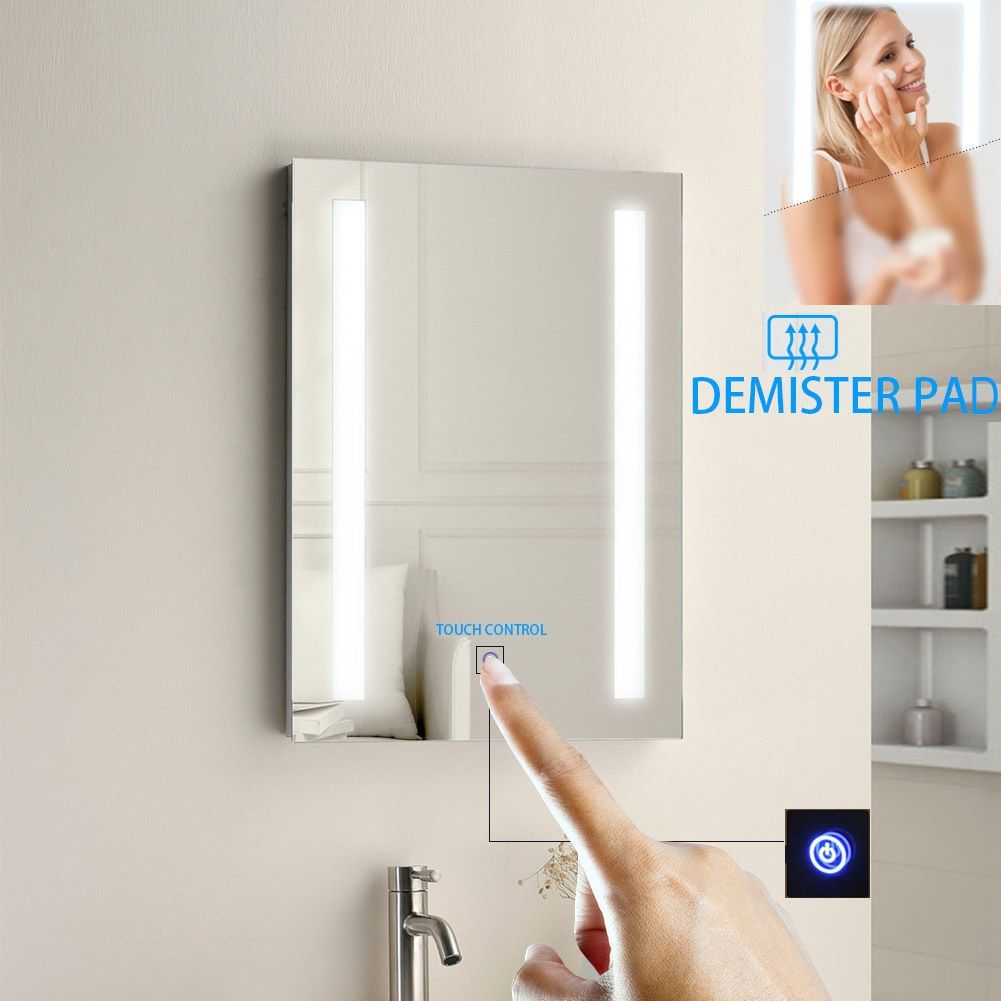
An illuminated bathroom mirror cabinet – also called an LED mirror cabinet – integrates energy-efficient LED light strips around the mirror perimeter, behind the mirror (for a halo effect), or within the cabinet door itself. Many modern illuminated cabinets also include anti-fog/demister pads, colour temperature adjustment (warm white for relaxing, cool white for precise grooming), and even Bluetooth speakers or shaver sockets.
Pros: Provides shadow-free task lighting at exactly face height – far superior to a single overhead ceiling light. LEDs last 50,000+ hours and use very little electricity. The anti-fog function means you never wipe the mirror after a shower.
Cons: Requires hardwiring by a qualified electrician (adds £50–£100 to installation). More expensive than non-illuminated models – budget £200–£650+. If the LEDs fail, replacing them can be tricky.
Best for: Master bathrooms, ensuite showers, and any bathroom where you shave or apply makeup regularly.
Single-Door vs Double-Door Bathroom Mirror Cabinet
Beyond the mounting and lighting type, you must choose between a single-door or double-door bathroom mirror cabinet. This decision affects access, storage layout, and visual balance.
-
Single-door bathroom mirror cabinet: The door hinges on one side and swings open. Inside, you typically have one or two fixed or adjustable shelves. Best for narrow spaces (minimum 50 cm wide) and solo use – but if you’re right-handed and the door opens left, it can feel awkward. Single-door cabinets cost less because they have fewer hinges and simpler construction.
-
Double-door bathroom mirror cabinet: Two mirrored doors that open from the centre (French-door style) or outwards. When both doors are open, they bounce light around the room and give you full access to the entire shelf area. This is excellent for couples sharing a bathroom – each person can open their own side. Double-door models usually start at 90 cm wide. They often include soft-close hinges as standard (a must-have feature). The downside? They cost more and require more wall width.
Pro tip: If you have a double-door cabinet, ensure the hinges are adjustable for perfect alignment. Cheap fixed hinges can cause the doors to misalign over time, creating an ugly gap.
Summary Table: Types of Bathroom Mirror Cabinets at a Glance
| Type | Best For | DIY Installation? | Average Cost (UK) |
|---|---|---|---|
| Wall-Mounted | Most bathrooms | Yes | £40–£250 |
| Recessed | New builds, renovations | No | £300–£600+ |
| Illuminated/LED | Grooming tasks | No (needs electrician) | £200–£650+ |
| Single-door | Narrow spaces, solo use | Yes | £40–£150 |
| Double-door | Couples, wide vanities | Yes (if wall-mounted) | £150–£400 |
Now that you understand the main types, you can narrow down which mirrored bathroom cabinet fits your space, budget, and daily routine.
Bathroom Mirror Cabinet Features: Must-Have vs Nice-to-Have
Must-Have Bathroom Mirror Cabinet Features
-
Soft-close hinges: No slamming doors that crack the mirror or wake the family. Non-negotiable.
-
Adjustable shelves: Allows you to store tall bottles of mouthwash or short pots of moisturiser.
-
Anti-fog/demister function: A heated pad behind the mirror prevents condensation. Essential if your bathroom lacks a powerful fan.
-
Moisture-resistant construction: Aluminium or sealed MDF. Check the product description for “suitable for bathroom zones”.
Nice-to-Have Bathroom Mirror Cabinet Features
-
Integrated LED lighting: Adjustable colour temperature (warm white for relaxing, cool white for precision grooming).
-
Shaver socket / USB charging port: Charge toothbrushes or trimmers inside the cabinet – no trailing wires.
-
Bluetooth speakers: Listen to podcasts while brushing your teeth.
-
Motion sensor activation: Lights turn on automatically when you approach.
-
Internal power points: Keep electric toothbrushes hidden yet charging.
Pro tip: Prioritise must-haves first. A bathroom mirror cabinet with soft-close hinges and anti-fog will outlast a cheaper model with gimmicks.
How to Choose Between a Standard Mirror and a Bathroom Mirror Cabinet
At first glance, a standard flat mirror and a bathroom mirror cabinet serve the same basic purpose: they let you see your reflection. But the choice between them has major implications for storage, space usage, cost, and installation complexity. Here’s how to decide which is right for your UK bathroom.
Scenario 1: You Have Zero Storage in Your Bathroom
If your toiletries currently live on the sink edge, windowsill, or a plastic caddy on the floor, you need a bathroom cabinet with mirror. A standard mirror does nothing to solve clutter. A mirrored cabinet instantly adds hidden shelves behind the reflective surface – perfect for toothbrushes, razors, medicines, and cosmetics. In a small ensuite or cloakroom, this one swap can eliminate countertop chaos overnight.
Verdict: Choose a bathroom mirror cabinet.
Scenario 2: You Already Have a Vanity Unit with Drawers
Do you have a fitted bathroom vanity with deep drawers or a separate storage tower? If yes, you may already have enough space for toiletries. In that case, a simple flat mirror (perhaps with integrated LED lighting) might be the cleaner aesthetic choice. Adding a bulky cabinet could make the room feel crowded.
Verdict: Consider a standard mirror, or a slimline wall mounted mirror cabinet (depth ≤10 cm) for extra backup storage.
Scenario 3: Your Wall Cannot Support a Heavy Cabinet
Many UK homes have plasterboard (drywall) stud walls, which are not strong enough to hold a heavy mirrored bathroom cabinet unless you screw directly into wooden studs. If the studs are not positioned exactly where you need the cabinet, you’d need heavy-duty toggle fixings (e.g., GripIt or Hollow Wall Anchors). Even then, a filled cabinet can weigh 15–20 kg – risky on weak plasterboard. A standard mirror weighs far less.
Verdict: Choose a lightweight standard mirror, or a very small bathroom medicine cabinet (under 5 kg) with reinforced fixings.
Scenario 4: You Rent Your Home and Cannot Drill Large Holes
Most tenancy agreements in the UK prohibit drilling into bathroom tiles or walls without permission. A standard mirror can often be hung with command strips or adhesive pads (though not ideal on steamy walls). A bathroom mirror cabinet typically requires multiple screw holes and heavy-duty wall plugs – potentially losing your deposit.
Verdict: Stick with a standard mirror, or ask your landlord for written permission to install a lightweight cabinet.
Pros and Cons Summary Table
| Factor | Standard Mirror | Bathroom Mirror Cabinet |
|---|---|---|
| Storage space | None | Excellent (hidden shelves) |
| Weight | Light (2–5 kg) | Heavy (5–20 kg when filled) |
| Installation difficulty | Low (adhesive or one screw) | Medium to high (multiple fixings) |
| Cost (UK) | £15–£150 | £39–£650+ |
| Ideal for rental properties | Yes | No (unless permitted) |
| Declutters countertops | No | Yes |
| Can include lighting | Yes (LED mirrors) | Yes (illuminated cabinets) |
Final Decision Rule
Choose a standard mirror if: you already have sufficient storage elsewhere, your wall is weak or tiled with no studs, you’re renting, or you simply prefer an ultra-minimalist look.
Choose a bathroom mirror cabinet if: your bathroom has zero storage, you want to hide clutter, you have a strong wall (brick or stud), and you’re willing to commit to a proper installation.
Still unsure? Consider a hybrid: a bathroom mirror cabinet with a slim profile (10 cm deep) and a small footprint – it gives you some storage without dominating the room.
Bathroom Mirror Cabinet Buying Guide: UK Shopping Tips
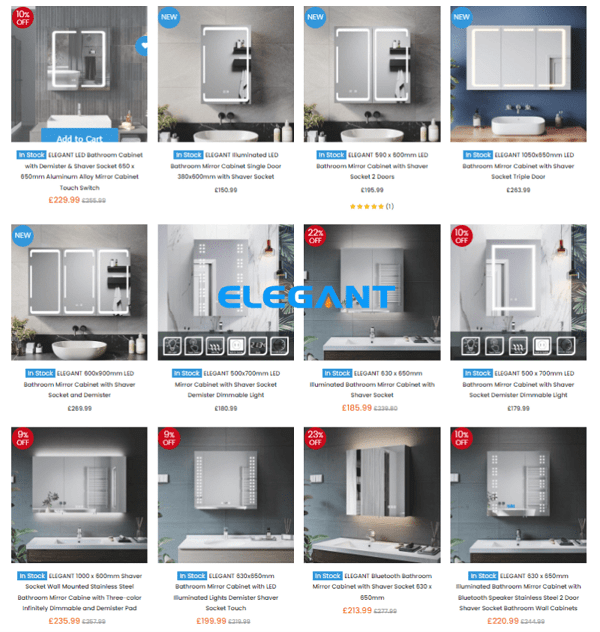
Finding the perfect bathroom mirror cabinet in the UK means knowing where to shop, what to look for, and how to spot genuine value. With so many retailers – from high street names to online specialists – it pays to do your research. Below, I’ve gathered practical shopping tips and highlighted three outstanding options from Elegant Showers, a trusted UK bathroom retailer known for combining quality, design, and competitive pricing.
Where to Buy the Best Bathroom Mirror Cabinet in the UK
The UK market offers a wide range of choices for every budget and style.
-
Dunelm: Great for budget-friendly finds – their Nautical Mirror Cabinet starts at just £39, perfect for a guest cloakroom.
-
John Lewis: A premium option with excellent warranties; the Aspect Single Mirrored Cabinet (around £645) is a standout.
-
ManoMano: An online marketplace with a vast selection, including many illuminated and anti-fog models.
-
Next: Known for contemporary designs, including black-framed and round cabinets that suit modern bathrooms.
-
Wayfair UK: A huge range with side-lighting and anti-fog options, plus frequent sales.
However, if you’re looking for a balance of quality, features, and value, Elegant Showers has emerged as a go-to online retailer. Based in the UK, they specialise in bathroom furnishings and have earned a strong reputation. Elegant Showers mirror cabinets are designed with moisture-resistant materials like stainless steel and aluminium, and many include sought-after features such as integrated LED lighting, shaver sockets, and soft-close hinges.
Top Picks from Elegant Showers for UK Bathrooms
Here are three exceptional bathroom mirror cabinets from Elegant Showers that cater to different needs and spaces.
Elegant Illuminated Bathroom Mirror Cabinet with Lights and Shaver Socket (500mm)
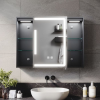
If you want an illuminated bathroom mirror cabinet that combines task lighting with smart storage, this model is an excellent choice. It measures 500mm wide, 700mm high, and 130mm deep – ideal for smaller bathrooms or ensuites. The integrated 15W LED lighting provides bright, energy-efficient illumination at 6000K, perfect for shaving or makeup application. A built-in shaver socket lets you charge electric razors or toothbrushes discreetly. Inside, you’ll find two adjustable shelves and a handy hidden mirror behind the door. The hydraulic soft-close hinge ensures quiet, gentle closing. With a special price of £142.99, it’s a fantastic investment for a master bathroom or ensuite.
Elegant 3-Door Stainless Steel Bathroom Mirror Cabinet (900mm Wide)
For larger bathrooms or family homes, this generous 900mm wide, 600mm high, 130mm deep cabinet offers superb storage. It features three top-quality safety glass doors and four ample internal shelves – enough space for the whole family’s toiletries. The cabinet is constructed from premium 0.5mm stainless steel board with a mirror-polished finish, making it highly moisture-resistant and anti-corrosion. At just £130.99 (down from £159.99), it’s an exceptional value for a large, durable, frameless design. Please note: this model does not include LED lighting, but its size and stainless steel construction make it a durable, long-lasting choice.
Elegant Soft-Close Double Door Bathroom Mirror Cabinet (800 x 600mm)
This 800mm wide, 600mm high, 120mm deep cabinet is perfect for medium-sized bathrooms. It features two soft-close doors, which minimise noise and add a touch of luxury. Inside, you get five shelves, two of which are adjustable, providing flexible storage for items of various heights. The frameless stainless steel construction (0.5mm board) is durable, easy to clean, and IP44 waterproof rated – ideal for steamy UK bathrooms. At only £110.99 (reduced from £129.99), this cabinet offers outstanding value for a soft-close, moisture-resistant unit. Like the 3-door model, it does not have built-in lighting.
Budget Considerations for Bathroom Mirror Cabinets
Here’s a quick guide to what you can expect to spend across different tiers:
-
Entry-level (non-illuminated, MDF): £39–£100 – Suitable for guest bathrooms or low-humidity spaces.
-
Mid-range (aluminium or stainless steel, soft-close, basic LED): £100–£300 – Ideal for family bathrooms; the Elegant cabinets listed above sit firmly in this value-packed bracket.
-
Premium illuminated cabinets (anti-fog, Bluetooth, shaver socket, motion sensor): £300–£650+ – For master ensuites or those who want every smart feature.
FAQs: Bathroom Mirror Cabinet Questions Answered (People Also Ask)
What is the best height for a bathroom mirror cabinet?
The centre of the mirror should be roughly at eye level for the primary user – typically between 160 cm and 170 cm from the floor. The bottom of the cabinet should sit 25–35 cm above the washbasin top. This gap prevents splashes from reaching the cabinet and gives you enough room to lean forward comfortably when washing your face. If household members have very different heights, aim for a compromise around 165 cm; young children can use a small step stool.
Are anti-fog mirror cabinets worth it?
Yes, especially in UK bathrooms without powerful extractor fans. An anti-fog/demister function uses a thin heating pad behind the mirror to warm the glass, preventing condensation from forming. Without it, you’ll be wiping the mirror constantly after every shower – often leaving streaks or damaging the coating over time. In a busy family bathroom or a steamy ensuite with weak ventilation, anti-fog is a must-have feature rather than a nice-to-have.
Can I install a bathroom mirror cabinet myself?
Surface-mounted cabinets (the most common type) are DIY-friendly if you have basic tools: a spirit level, electric drill, tape measure, and appropriate wall plugs. However, recessed installations or any illuminated cabinet requiring hardwiring must be installed by a qualified electrician to comply with UK building regulations. Before drilling, always check that there are no hidden pipes or wires behind the wall.
How much depth should a bathroom mirror cabinet have?
Standard depth ranges from 10 cm to 15 cm (4–6 inches). A 10 cm cabinet is slimmer and safer for narrow ensuites where space is tight. A 15 cm cabinet holds more – tall shampoo bottles, deodorant cans, or multiple product layers – but requires more forward clearance. When choosing depth, also account for the door swing when open, especially in narrow bathrooms where a fully opened door can block the walkway.
What does IP44 mean and why does it matter?
IP44 is the minimum waterproof rating required for electrical bathroom products in the UK. It means the cabinet is protected against water splashes from any direction – safe for Zones 2 and 3 in a bathroom (areas outside the immediate shower zone). If you see IP55 or higher, that indicates even greater water resistance, suitable for closer proximity to showers or baths. Never install an illuminated cabinet with a lower IP rating in a bathroom.
Conclusion: Choosing Your Perfect Bathroom Mirror Cabinet
Choosing the perfect bathroom mirror cabinet comes down to three things: accurate measurements, the right moisture-resistant material (aluminium or stainless steel over MDF), and features you‘ll actually use (soft-close hinges and anti‑fog are must‑haves; Bluetooth is optional). Measure your space carefully, match the style to your bathroom, and invest in quality where it counts – the right cabinet will serve you for a decade or more.
If you’re looking for a trusted UK retailer that ticks all these boxes, Elegant Showers is an excellent place to start. With free delivery to mainland UK, Elegant Showers combines quality, value and peace of mind all in one place. You can browse the full range of bathroom mirror cabinets and explore more design ideas at https://www.elegantshowers.co.uk/.

Validate your login