

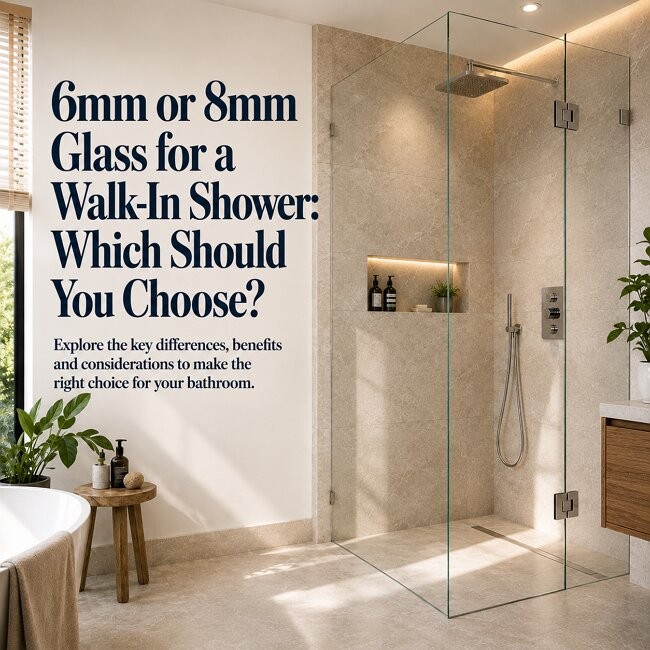
Choosing the right walk-in shower glass thickness is about more than appearance. The thickness of a shower screen can affect rigidity, weight, hardware requirements, installation, cost and how substantial the finished enclosure feels.
For UK homeowners comparing 6mm or 8mm glass for a walk-in shower, both can be suitable when used as part of a properly designed shower-screen system. However, they are not identical. 8mm toughened glass is generally the better all-round choice for a modern walk-in shower, particularly for larger fixed panels or minimalist designs. 6mm shower glass can still be an excellent option for smaller, well-supported screens where the manufacturer has specifically designed the enclosure around 6mm glass.
The key is to consider the entire shower system—not glass thickness alone.
Table of Contents
- 6mm or 8mm Glass for a Walk-In Shower: The Quick Answer
- 6mm Glass for a Walk-In Shower: Pros, Cons and Best Uses
- 8mm Glass for a Walk-In Shower: Pros, Cons and Best Uses
- 6mm vs 8mm Glass: Head-to-Head Comparison
- Factors to Consider When Choosing Between 6mm and 8mm Glass
- 6mm or 8mm Glass for a Walk-In Shower: Which Should You Choose?
- Frequently Asked Questions (FAQs) about 6mm and 8mm Shower Glass
6mm or 8mm Glass for a Walk-In Shower: The Quick Answer
Is 6mm or 8mm Glass Better for a Walk-In Shower?
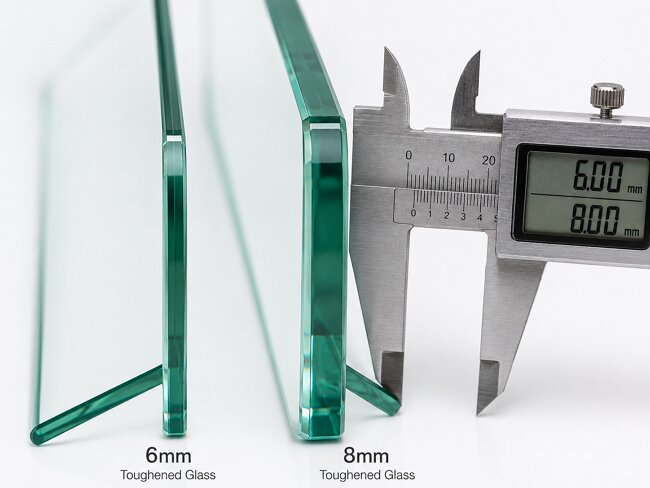
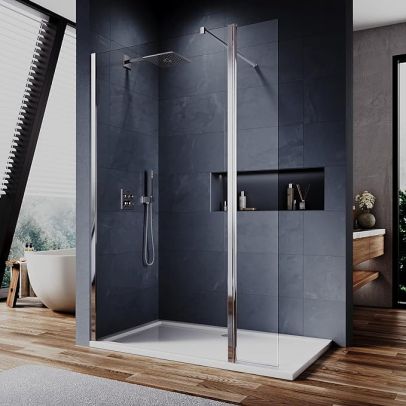
For most walk-in showers, 8mm toughened safety glass is the better all-round option because it offers greater rigidity, less noticeable flex and a more substantial feel. It is particularly well suited to fixed walk-in and wet-room panels.
However, 6mm toughened glass can be perfectly suitable for smaller or more strongly supported shower screens. The correct choice depends on panel dimensions, framing, stabilising bars, wall fixings and the manufacturer's specifications.
In other words, 8mm is usually preferable, but a correctly engineered 6mm shower screen is not automatically inferior or unsafe.
6mm vs 8mm Walk-In Shower Glass at a Glance
| Feature | 6mm Shower Glass | 8mm Shower Glass |
|---|---|---|
| Rigidity | Good with suitable support | Greater rigidity |
| Panel flex | More noticeable | Less noticeable |
| Weight | Lighter | Heavier |
| Cost | Usually lower | Usually higher |
| Appearance | Slim and lightweight | More substantial |
| Large fixed panels | More dependent on bracing | Often better suited |
| Hardware load | Lower | Higher |
| Installation | Easier to handle | Requires more care |
| Best for | Smaller, supported screens | Most modern walk-in screens |
6mm Glass for a Walk-In Shower: Pros, Cons and Best Uses
What Is 6mm Toughened Shower Glass?
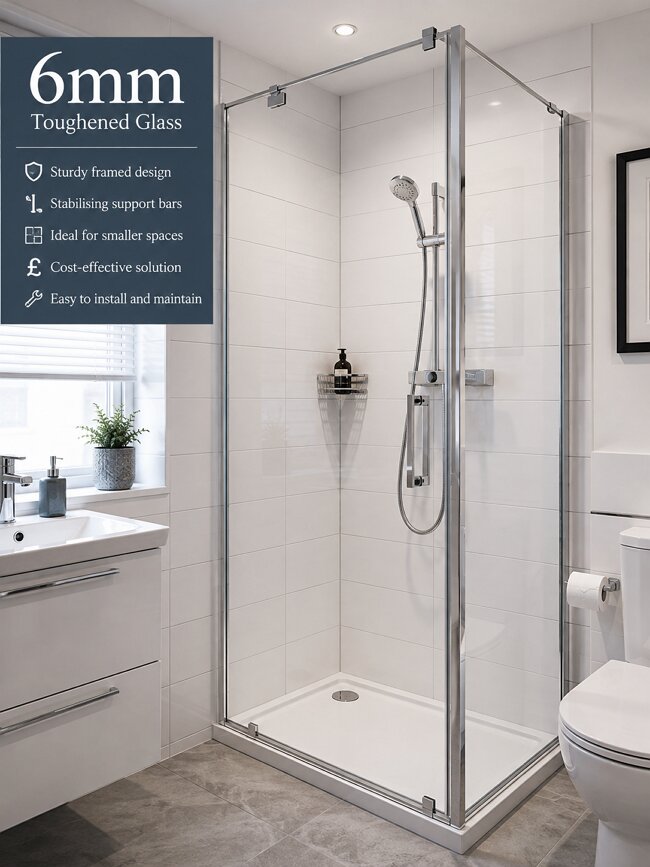
A 6mm shower screen uses glass approximately 6 millimetres thick. Quality shower enclosures use safety glass designed for the application rather than ordinary household window glass.
It is important to separate glass thickness from glass safety specification. A panel being 6mm thick tells you its dimensions; it does not, by itself, tell you whether the complete shower enclosure meets the appropriate product and safety requirements.
Advantages of 6mm Glass for a Walk-In Shower
The main advantages of 6mm toughened glass include lower weight and, in many ranges, a lower purchase price.
Because the panel weighs less, it can also be easier to transport, manoeuvre and install. Compatible wall profiles and support systems do not have to carry as much glass weight as equivalent 8mm systems.
For compact shower screens, particularly where there is substantial framing or bracing, 6mm glass can provide an excellent balance of performance and value.
Disadvantages of 6mm Walk-In Shower Glass
The primary disadvantage is increased flex compared with an otherwise equivalent 8mm panel.
For a tall or wide open shower screen, that difference may make 6mm glass feel less substantial. Larger panels may also depend more heavily on framing or stabilising bars to provide the required rigidity.
Homeowners seeking an extremely minimalist, premium wet-room appearance therefore often gravitate towards 8mm or thicker glass.
When Should You Choose 6mm Shower Glass?
Consider a 6mm walk-in shower screen when:
- the manufacturer specifically designs the product for 6mm glass;
- the glass panel is relatively compact;
- the panel has strong wall-channel or stabilising-bar support;
- keeping the overall weight lower is beneficial; or
- obtaining a cost-effective shower enclosure is a priority.
Do not substitute 6mm glass into an enclosure designed for another thickness. Hardware, channels and tolerances must match the specified glass.
8mm Glass for a Walk-In Shower: Pros, Cons and Best Uses
What Is 8mm Toughened Shower Glass?
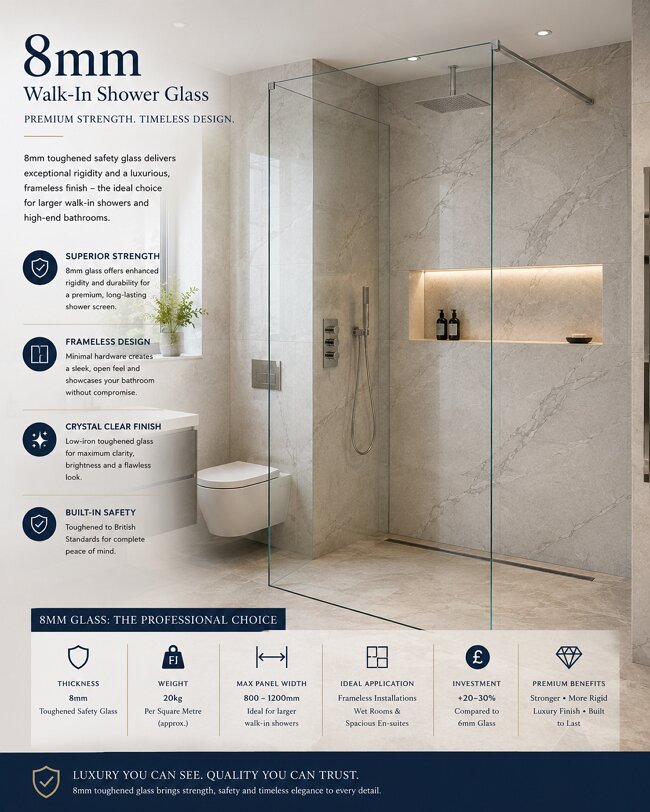
8mm toughened shower glass is widely used for modern walk-in showers and wet-room screens in the UK.
It offers noticeably more rigidity than 6mm glass while remaining practical for residential bathroom installations. Many contemporary fixed-panel shower systems use 8mm glass as a balance between substantial construction and manageable weight.
Advantages of 8mm Glass for a Walk-In Shower
The biggest advantage is rigidity.
An 8mm walk-in shower screen generally flexes less than a comparable 6mm panel, which can make a large fixed screen feel more solid and premium.
Other benefits include:
- suitability for many larger fixed shower panels;
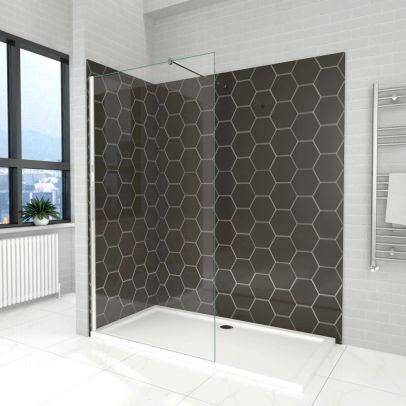
- compatibility with minimalist and semi-frameless designs;
- a substantial polished-glass edge;
- less perceptible movement when the glass is touched; and
- widespread availability in premium walk-in shower ranges.
Disadvantages of 8mm Walk-In Shower Glass
Thicker glass comes with additional weight.
An 8mm panel therefore needs profiles, brackets, support arms and wall fixings designed to carry it. The condition of the wall behind the tiles also becomes important.
It is usually more expensive than an equivalent 6mm product and can be harder to manoeuvre, particularly with large walk-in screens.
More thickness is therefore not automatically better. The complete installation needs to be engineered correctly.
When Should You Choose 8mm Shower Glass?
Choose 8mm glass when you want:
- greater panel rigidity;
- a large fixed walk-in shower screen;
- a minimalist or lightly framed enclosure;
- a more substantial premium feel; or
- a long-term bathroom upgrade where the additional cost is acceptable.
For a typical modern walk-in shower, 8mm is usually the strongest default choice between 6mm and 8mm.
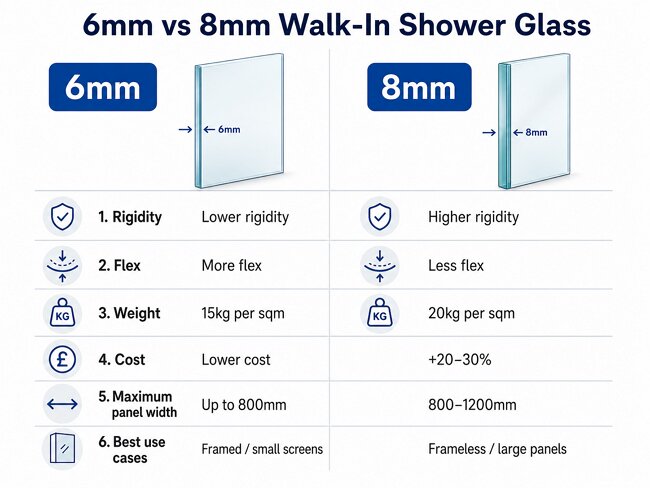
6mm vs 8mm Glass: Head-to-Head Comparison
| Feature | 6mm Glass | 8mm Glass |
|---|---|---|
| Weight per m² | ~15kg | ~20kg |
| Relative Cost | Lower | Higher (+20-30%) |
| Rigidity | Moderate – some flex | High – minimal flex |
| Best For | Framed, small screens | Frameless, walk-in designs |
| Maximum Panel Width | ~800mm | ~800-1200mm |
| Premium Feel | Moderate | High |
| Hardware Requirements | Standard | Heavy-duty required |
| Installation Complexity | Easier | More challenging |
Factors to Consider When Choosing Between 6mm and 8mm Glass
Selecting the ideal glass thickness for your walk-in shower extends far beyond a simple preference for "thicker is better." It involves a nuanced evaluation of your bathroom's physical constraints, your household's daily routines, and the long-term financial implications. Below is a comprehensive breakdown of the critical variables that should guide your decision.
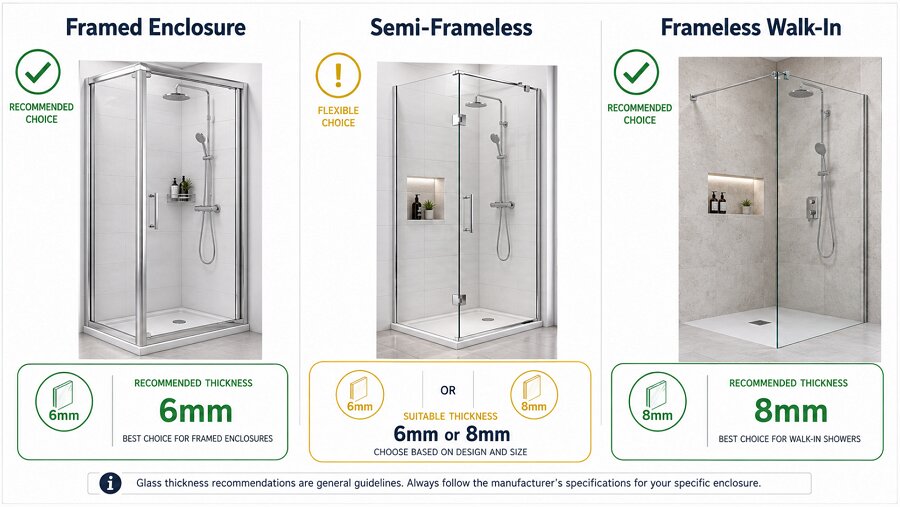
Shower Enclosure Type
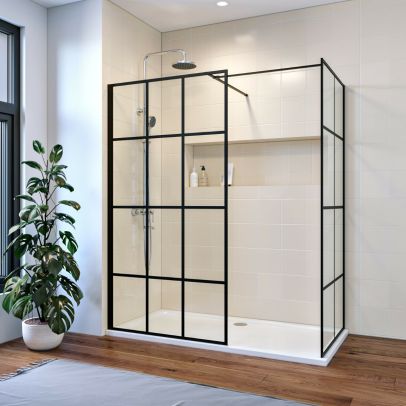
Framed enclosures – 6mm glass is often sufficient because the frame provides structural support.
Semi-frameless – Both 6mm and 8mm can work, though 8mm offers better performance.
Frameless walk-in showers – 8mm is the recommended minimum. Frameless designs give a cleaner, contemporary look and are usually specified with thicker glass (8mm).
Panel Size and Width
Smaller panels (under 800mm) – 6mm can be adequate.
Larger panels (800-1200mm) – 8mm is recommended for stability.
Very wide panels (over 1200mm) – Consider 10mm for maximum rigidity.
Daily Usage and Household Type
Family bathrooms with high daily use – 8mm offers better durability and longevity.
Guest bathrooms or low-use en-suites – 6mm may be sufficient.
Commercial or high-traffic settings – 8mm or thicker is recommended.
Budget Considerations
While 6mm glass offers immediate cost savings, 8mm glass may provide better long-term value through superior durability and reduced maintenance costs. The price difference is often modest in the context of a complete bathroom renovation.
Design Preferences
Minimalist, sleek aesthetic – Frameless design with 8mm glass.
Traditional or framed look – 6mm can work well.
Desired "feel" – Solid and premium (8mm) versus lighter and budget-friendly (6mm).
Maintenance and Cleaning
Both thicknesses require similar cleaning routines. However, thicker glass may be more resistant to damage during cleaning and offers more margin against chips and scratches. Hydrophobic and easy-clean coatings are available for both thicknesses.
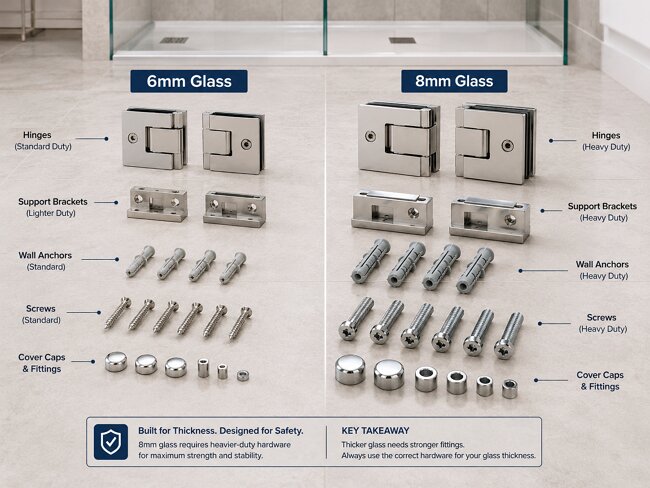
Installation Considerations for 6mm and 8mm Shower Glass
Proper installation is critical regardless of glass thickness. Key considerations include:
Hardware rating – All fixings, hinges, and hardware must be rated for the specific glass thickness you choose.
Hinge requirements – 8mm glass requires heavier-duty hinges capable of supporting the additional weight.
Fixings and wall anchors – Must support the weight of 8mm panels.
Handling and transportation – 8mm glass is significantly heavier and more difficult to manoeuvre.
Edge finishing – Polished or safety-finished edges reduce injury risk and improve appearance, especially for exposed edges.
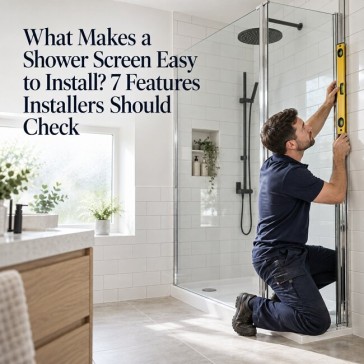
Professional installation – Recommended for both thicknesses, especially for frameless 8mm designs. Most standard shower screens are installed within 1-3 hours, though custom screens may take longer.
Common installation mistakes – These include using incorrect hardware, failing to account for uneven walls, and improper sealing. Older UK homes frequently have walls that are not square, which may require adjustable profiles or bespoke glass shaping.
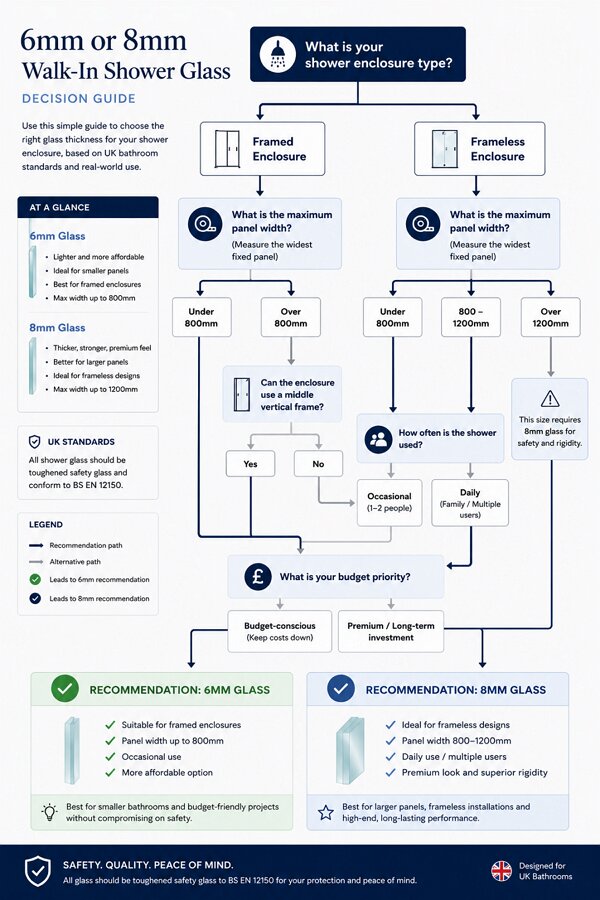
6mm or 8mm Glass for a Walk-In Shower: Which Should You Choose?
Choose 6mm Walk-In Shower Glass If…
Choose 6mm glass if the enclosure has been specifically engineered for it and you want a lighter, often more affordable screen.
It is particularly suitable where the panel is relatively compact and supported by substantial framing, profiles or stabilising hardware.
Choose 8mm Walk-In Shower Glass If…
Choose 8mm glass if greater rigidity, a more substantial feel and suitability for a larger minimalist fixed panel are priorities.
For most homeowners deciding specifically between 6mm vs 8mm glass for a modern walk-in shower, 8mm is the more versatile choice.
Check These Details Before Ordering
Whichever thickness you choose, check:
- permitted panel width and height;
- safety-glass specification;
- enclosure testing and manufacturer documentation;
- required support bars;
- compatible wall channels and brackets;
- suitability of the wall structure;
- installation tolerances;
- warranty conditions; and
Frequently Asked Questions (FAQs) about 6mm and 8mm Shower Glass
Is 6mm glass strong enough for a walk-in shower?
For framed enclosures or smaller panels under 800mm, yes. However, for frameless walk-in designs, 8mm is generally recommended. 6mm glass can exhibit noticeable flex that may affect the perceived quality and longevity of the enclosure.
What is the maximum width for 6mm shower glass?
Industry guidelines suggest keeping 6mm panels under approximately 800mm width. Wider panels require 8mm or 10mm for adequate stability.
Is 8mm glass heavier than 6mm?
Yes. 8mm glass weighs approximately 20kg per square metre compared to around 15kg for 6mm. This has implications for handling, installation, and hardware requirements.
Do I need special hinges for 8mm glass?
Yes. Hinges and hardware must be rated for the weight and thickness of 8mm glass. Using incorrect hardware is a common installation mistake that can compromise safety and performance.
Which is better: 6mm or 8mm glass for a wet room?
For wet rooms and walk-in showers, 8mm is the preferred choice for stability and premium appearance. The wet room environment demands glass that can withstand regular use without excessive flex.


Validate your login